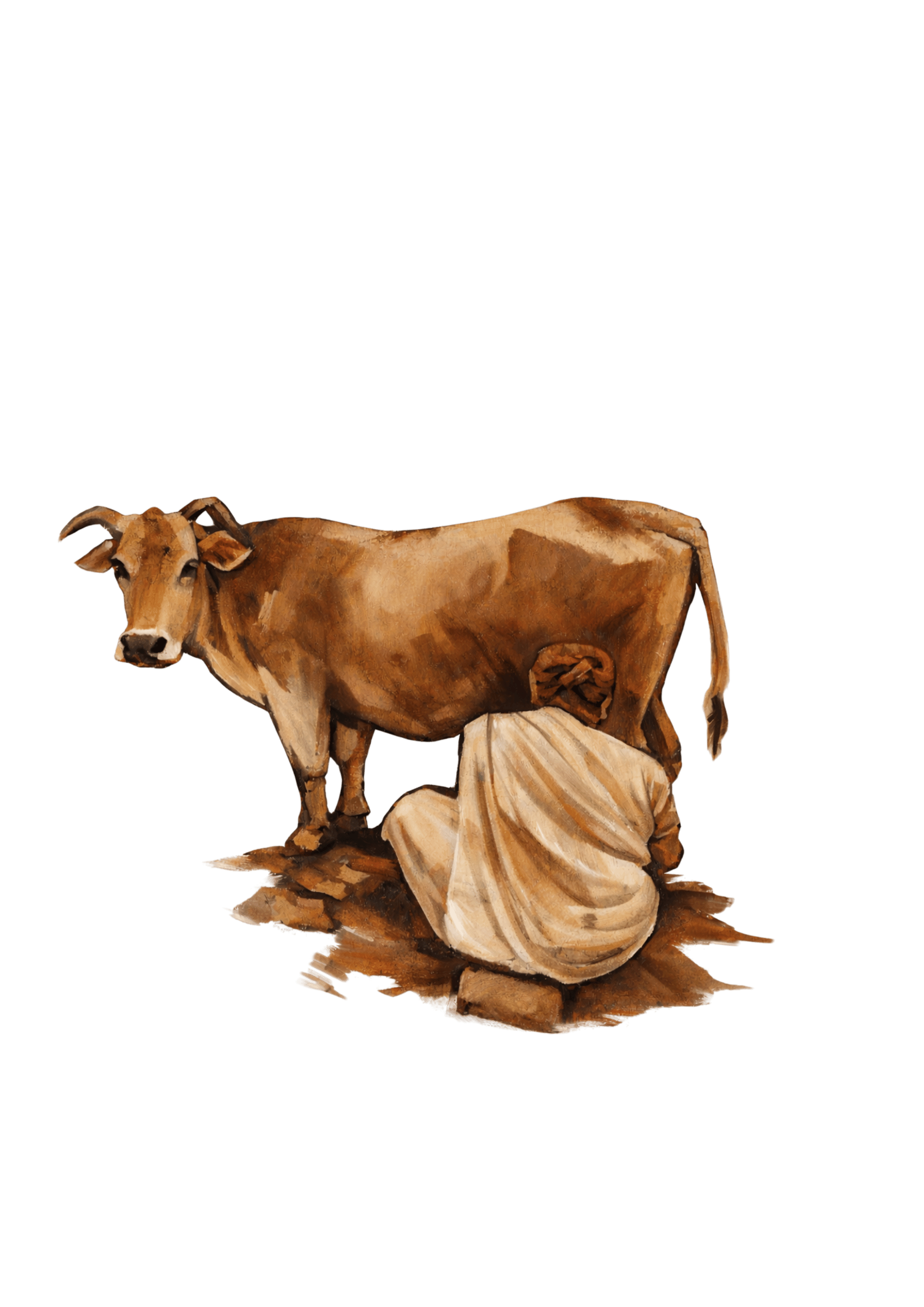
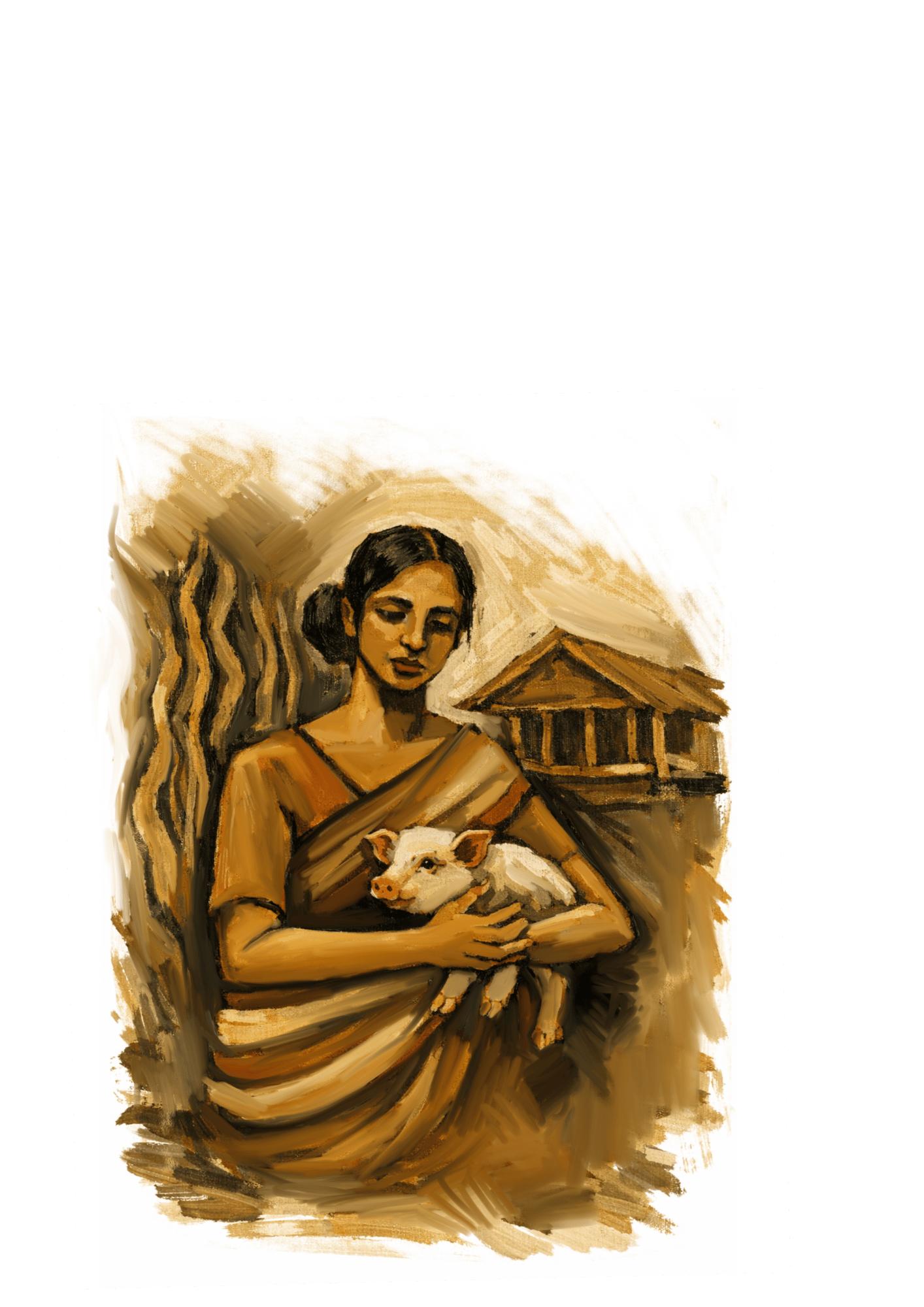
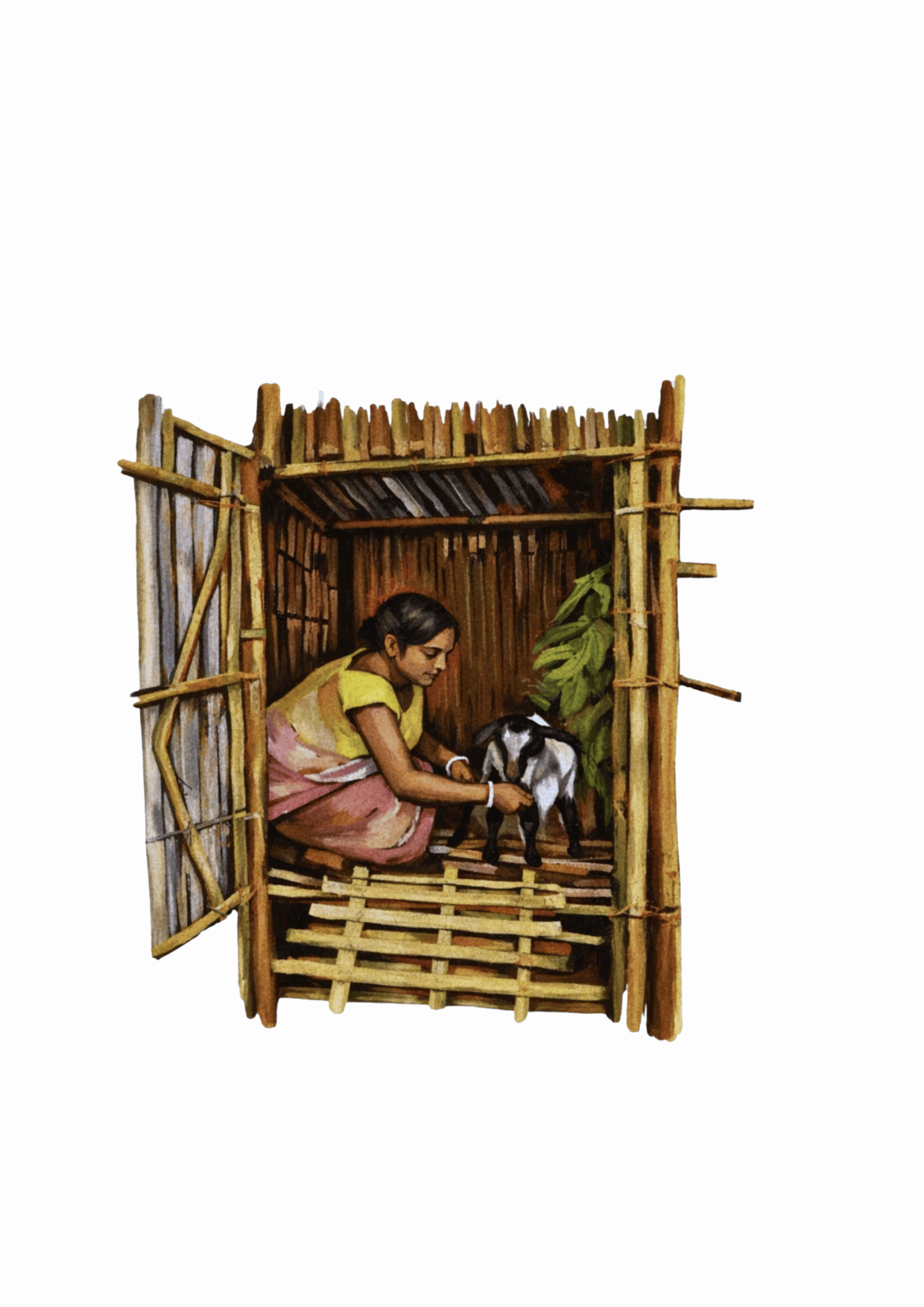
Adi grew up in Nahira, a village in rural Assam, where caring for cattle was not just livelihood but tradition. His father, a teacher and priest, passed down a way of life in which cows supported the family’s dairy needs, farming practices, and cultural rituals. For Adi and his siblings, tending cattle was part of everyday childhood—before and after school, in harvested fields where cows grazed and children learned, played, and grew.
Later, Adi moved to the semi-urban town of Dudhnoi to continue his father’s legacy as a teacher and priest. Determined to hold on to his roots, he built a home near rice fields and bought a cow. Despite the pressures of work and family life, he continued traditional practices—growing vegetables with cow dung and sharing milk and manure with neighbours. Festivals like Goru Bihu remained lived traditions for his children, while for many others they had already become textbook stories.
As development reshaped Dudhnoi, open fields gave way to concrete. Grazing spaces disappeared, and the cow became dependent on costly commercial feed. The younger generation struggled to connect with traditions that no longer fit their urbanising lives.
After Adi’s death, his family faced a difficult choice: to sustain a tradition that demanded time, money, and labour, or to let an inherited way of life quietly end. Adi’s last cow stood at the fragile edge where tradition meets change.