Today, due to blight disease entire 2bigha of tomato got damaged . Even after applying lots of medicine,it did not help and nothing worked. It seems there will be a lot of loss this time as well. Kabita Didi’s vegetables has also been affected by blight disease. All the farmers in the village are saying that the crops have been damaged because a disease has spread in the fields. We will have to call our Krishi Sakhi. If she gives some medicine, we might be able to fix the issue. After informing the Sakhi, I know that tomorrow there is a training session on farming at the panchayat, focused on mainly polyculture farming. I have also been invited to attend it. At the same time, I informed the other farmers in the village as well.
I got ready at 10 a.m. After feeding my husband and settling him in his wheelchair, I left for the training as no one else was at home to look after him. One baideo conducted a training on polyculture farming, explaining how adopting polyculture can lead to better profits as well as higher production. All the farmers of Mansiri village attended the session attentively and this time have planned to practice polyculture farming in the upcoming Rabi season.
This rabi session in our village a total of 150 farmers have practiced polyculture farming. For border crops, we planted maize and for the main crops we planted tomato, bitter gourd and chili using Nunhems company seedlings. These seedlings were prepared in a polyhouse by one of the village women after receiving training. We followed exactly the methods taught by the baideo and we are also applying neem oil in between to control pests. All the farmers are hopeful for this time that they will get a good harvest. The Baideo also came to check whether everyone’s crops were growing well. Suresh, who supports his family through farming, has harvested 300 tons of tomato this time and the chili plants have not started flowering yet they still need some time. This time I also did polyculture farming on 3 bighas on land. Everything is fine so far and hope the harvest turns out well. If that happens, I will be able to cover my two children’s school fees and my husband’s medical expenses as well.
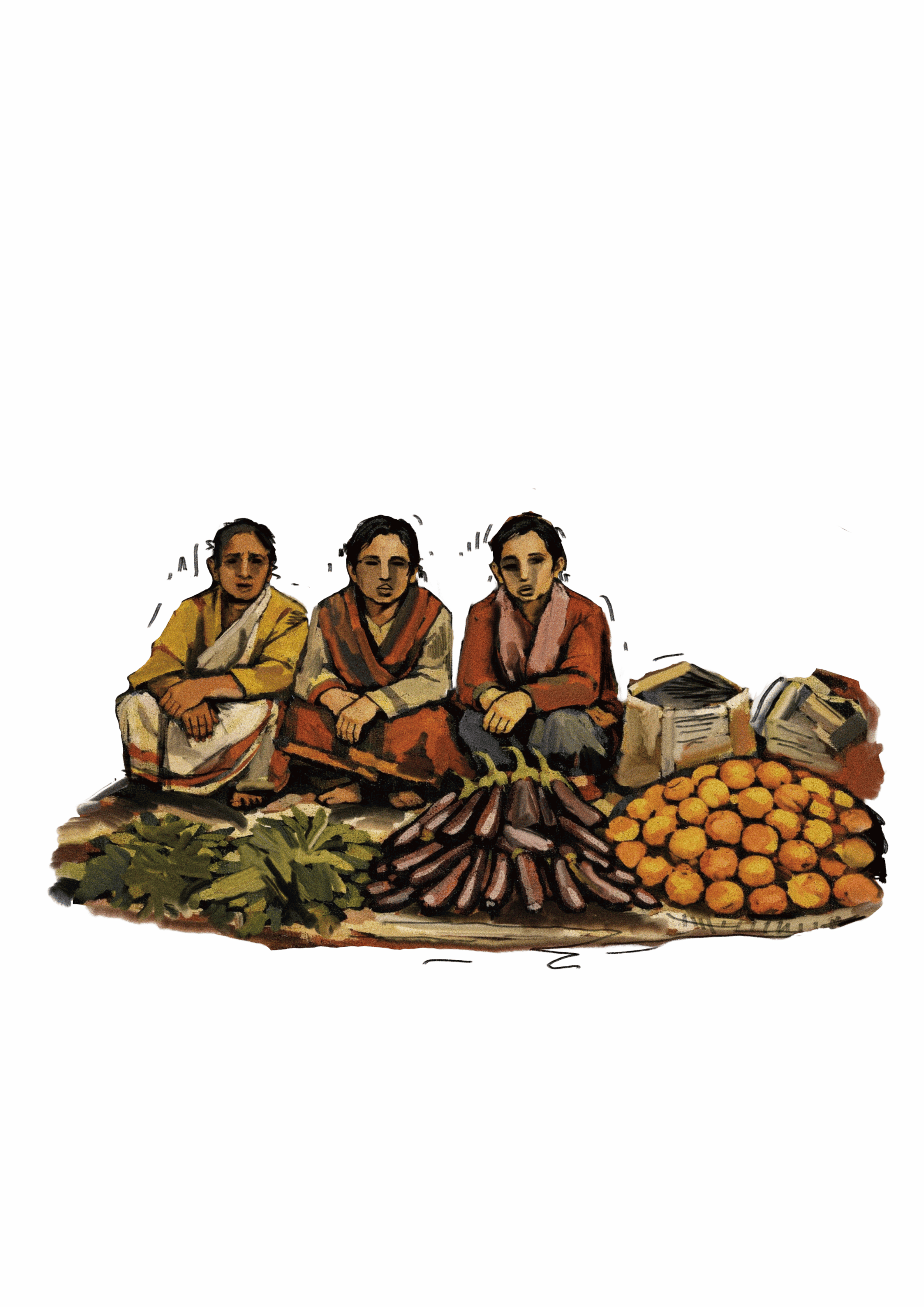
A sweet fragrance was in the air and I could even smell the soft, beautiful scent of cotton from somewhere. A little further ahead there was a pile of fish. When we walked a bit more, we saw a place where Kabita and I sat down. Everywhere we looked, there were many familiar people, all looking very happy. In front of them were heaps of tomatoes, chilies, bitter gourd, maize, and various other vegetables. Customers had also gathered, and they were selling the vegetables at rates like bitter gourd for Rs. 80 per kg and tomatoes for Rs. 40–60 per kg. I also sold chilies at Rs. 120 per kg, and I sold the other vegetables at similar prices. That day, I earned a total profit of Rs. 15,000 from 300 kg of vegetables. After finishing the sales, Kabita and I returned from the Rongajan weekly market in the evening.
Today, all the farmers came for the monthly panchayat farmers meeting after a month. Krishi Sakhi and SeSTA baideo also attended. Each farmer took turns sharing their experiences about the crop growth. I also shared that this time we did not see any blight disease and there were no fungal or pest attacks. The production has also been good each plant is giving 1–1.5 kg of tomatoes per week. I sold chilies at Rs. 120 per kg, and this time I went to the market myself to sell the produce instead of giving it to the local traders. Nursery enterprenur didi also shared her experience. She said that everyone bought her seedlings at Rs. 2 each and she has earned around Rs. 20,000 in profit so far. With this, she is planning to further improve her soil less nursery at this time. After that, SeSTA baideo asked everyone to write the names of pests and diseases in their training notebooks, which she checked, along with the record of vegetable selling prices. They told us to maintain these records regularly after every sale. After the meeting, we all had tea and then left the meeting.
This time I was able to pay my children’s school fees on time and buy all of my husband’s medicines. I also bought a weeder for vegetable field. I feel that in the village, everyone has managed pests and diseases well and all the families have earned good profits. We also supplied vegetables weekly to Pachmile and Chariduar Mandi markets. Along with that, the Krishi Vigyan Kendra and the Agriculture Department have provided seeds, manure, and organic pest control medicine to all the farmers. The officers also visited our fields and they were happy to see the benefits the farmers are getting. Now a Producer Group has been formed for all the farmers named MOHIMA PG, where everyone will sell their vegetables and earn profit collectively. So, we farmers have planned for three seasons rabi, summer, and winter on what vegetables we will cultivate. We will also receive loan support and material support from SeSTA and ASRLM. In this way, we have created a vegetable cultivation cluster.