In broad daylight, Rekha sat beside a harvested paddy field, watching a kid (baby goat) run from one corner to another. As she observed this lively scene, she reflected on her journey and how far she had come. Rekha Barman hails from the picturesque village of Raghunandanpur, located in the Boitamari block of Bongaigaon district. During the harvesting season, golden paddy fields line both sides of the road as one enters the village. Rekha lives with her husband and their son. She enjoys keeping herself busy and strongly believes in the saying, “An idle brain is a devil's workshop.” Her favorite pastime activity is playing with her goats, and she currently has three healthy ones.
Adopting goat rearing as a means of livelihood was never on her bucket list, but the surprises life throws at us are what keep us going. Rekha is a strong-willed woman who has never let failures demotivate her. The smile she carries always acts as a shield against the odds and obstacles of her life. A few years ago, she was hesitant to pursue goat rearing as a livelihood, despite her immense love for the animals. When Rekha was a newly married bride, her husband’s family owned three goats. Unfortunately, just one to two weeks after their marriage, the goats fell ill and died, leaving the family heartbroken after experiencing a significant loss. They were new to goat rearing and unfamiliar with modern techniques.
After the birth of their son, Rekha once again proposed to her husband that she wanted to buy goats and practice goat rearing. Initially, her husband was hesitant, weighed down by the previous incident and financial constraints. However, seeing her willingness and motivation, he eventually managed to purchase two goats of the Black Bengal breed. Rekha dedicated her time to managing the goats and ensuring their needs were met. Unfortunately, due to unforeseen circumstances, she faced failure again. The family was devastated for the second time and vowed never to pursue goat rearing as a livelihood again. Some neighbors even suggested that the issue might be the color of the goats, as both batches they had raised were black, leading them to believe that black goats did not suit them.
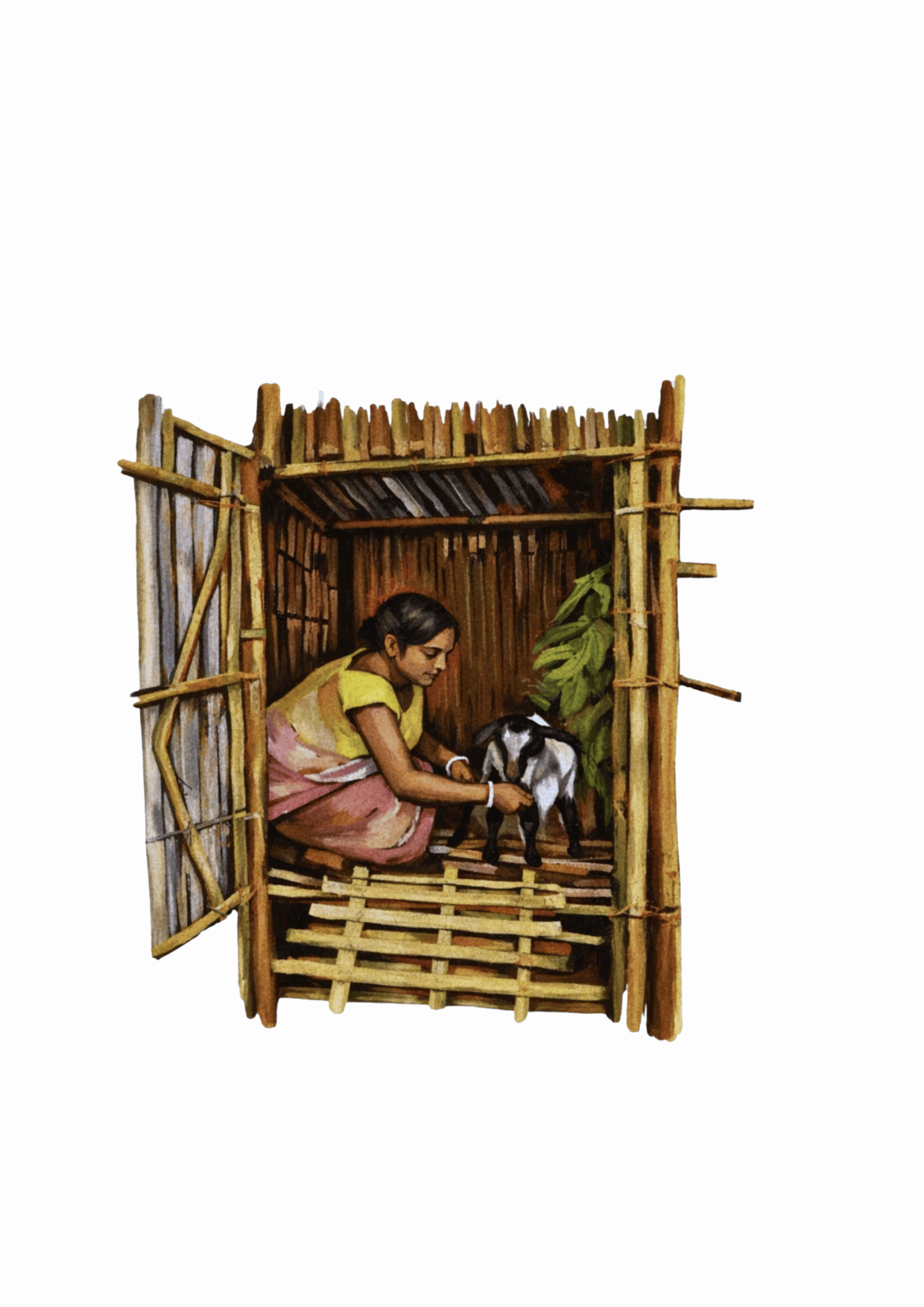
Even though the family had given up on goat rearing, Rekha secretly prepared herself for another chance. She realized her husband was unlikely to support her financially and began searching for alternative ways to earn money. Her prayers were answered when she learned that the organization called SeSTA was funding community women to start livelihood activities under a project named “AGRI SHE: EMPOWERING HER ROOTS,” which was operating in their village. Without hesitation, Rekha enrolled as a beneficiary under the project, used the funds to purchase two goats, and construct a shed for them. This time, she attended all the training sessions conducted by SeSTA professionals on the scientific and advanced methods of goat rearing. She built a shed, vaccinated the goats, and learned about feed management and basic hygiene. It has now been almost four months since Rekha began goat rearing, and her goats are in good health. Recently, one goat gave birth to a kid, bringing her total to three goats.
Rekha has not yet begun earning from goat rearing, but she is content with her current efforts. Her dedication and strong determination serve as examples to those who fear failure. If Rekha had not shown this willingness and courage, goat rearing would still be just a dream for her.