Every morning my father sits by the window with his cup of tea, eyes fixed on the news. The anchor’s voice rises and falls in practiced rhythm, speaking of growth, progress, and stability. My father nods approvingly.
“At least this government is doing something,” he says, almost to himself.
I walk in late, still half asleep, but that sentence is enough to wake me up. “Doing something?” I ask. “Doing something for whom?”
He glances at me with that half-smile of a man who thinks he has already lived enough to know better. "You don't remember the old days," he says. "We used to wait weeks for our salaries. Twenty days, sometimes more. I had to borrow money just to get by. Now I get my salary on time. Life is easier."
He says it with relief, and I can't blame him. Years of struggle have taught him to be grateful for small certainties. But his pride comes from the comfort of receiving what he was always owed.
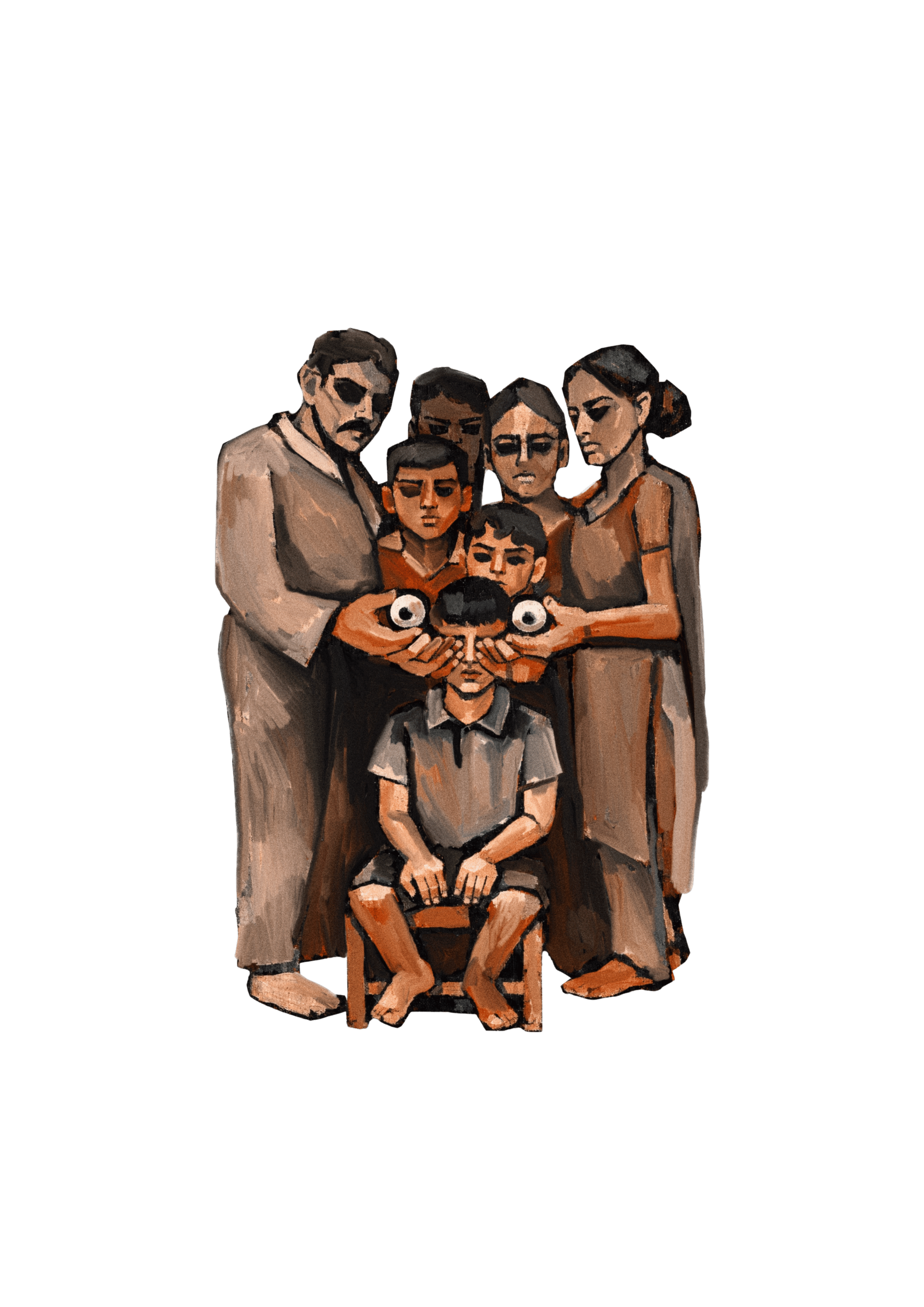
I tell him about what I see and hear, people beaten for what they eat, silenced for what they say, scared for what they believe. I remind him that a democracy is not measured by how quickly a salary arrives, but by how freely a citizen can speak. He shakes his head, impatient. "You always talk about the negatives," he says.
But it isn't negativity to see what's wrong. It's awareness. It's responsibility. What he calls peace, I call silence. And silence, in times like these, feels like surrender.
It's strange how manipulation never feels like manipulation when it comforts you. It doesn't need to shout or threaten. It only needs to give you just enough reason to stop questioning. A timely salary, a new road, a cleaner park- and suddenly the bigger injustices fade into the background. The news becomes background music to your relief.
My father isn't uneducated. He reads, listens, and forms opinions. But even the educated can be misled when the comfort suits them. Give them stability, and they'll defend the hand that feeds them, even if that same hand strangles someone else.
He believes things are better because they're better for him. That's the quiet tragedy of privilege- it blinds without hurting, it comforts without conscience.
Do I think my father is dumb? No. He's thoughtful, sincere, and shaped by hardship. But he's also a man who has confused personal comfort with collective progress. And that confusion is not his alone- it's everywhere. It lives in conversations at dinner tables, in the silence of neighbours, in the pride of those who mistake obedience for patriotism.
My father is not dumb. He's just comfortable. And in times like these, comfort is the easiest way to be controlled.