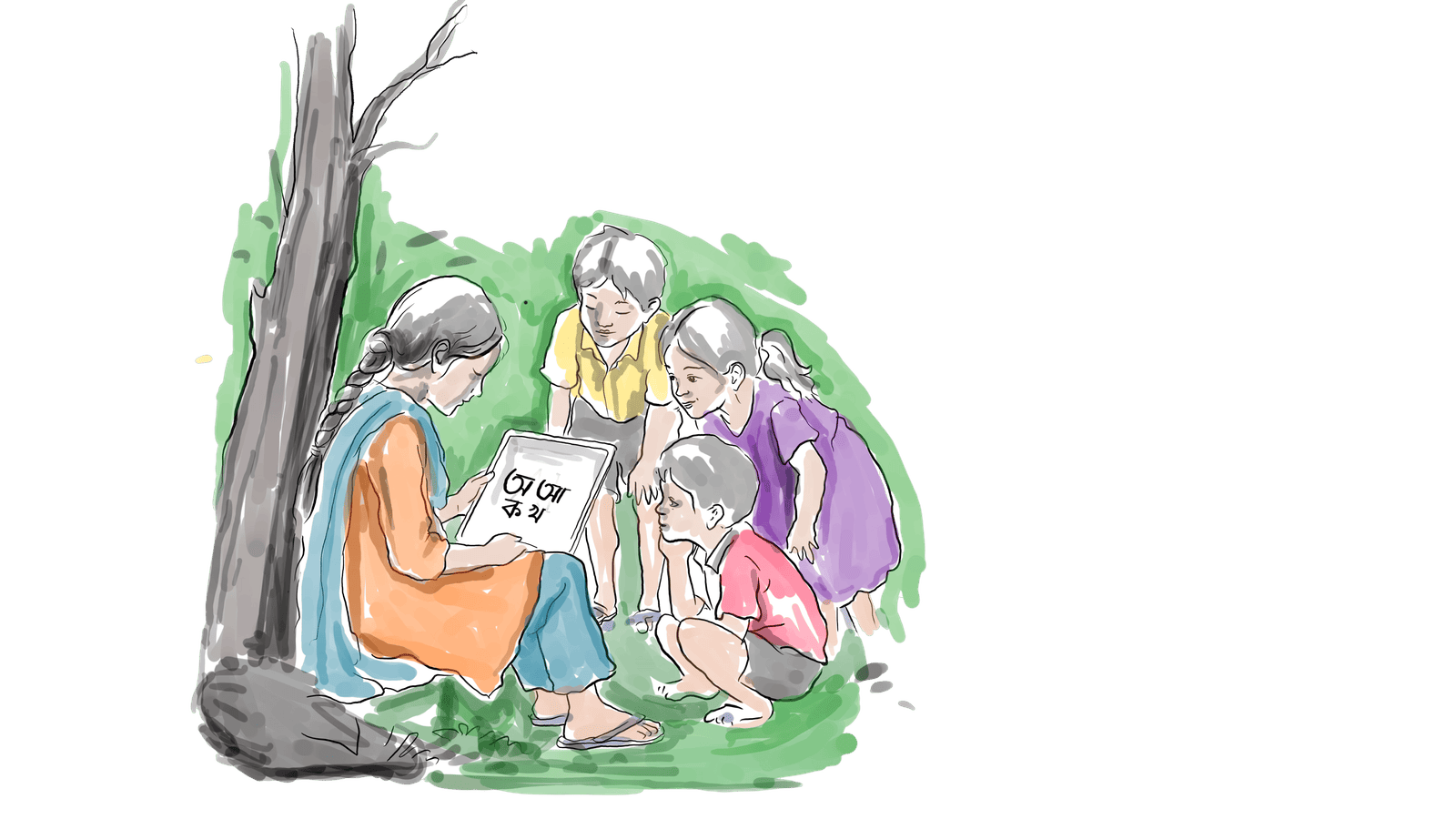
Education in North Eastern India faces deep structural inequities. The region’s difficult terrain, remoteness, and years of insurgency have slowed social development and limited access to quality education. Many schools lack basic infrastructure such as adequate classrooms, furniture, and toilets. The shortage of trained teachers is another major challenge. In several rural schools, one teacher is responsible for teaching multiple subjects or grades, making it extremely difficult to deliver quality learning. Dropout rates remain significantly higher than the national average, with many students leaving school early to support their families through farming or household responsibilities. While India’s national secondary school dropout rates range between roughly 8–13%, several northeastern states report rates closer to 15–20%. Data from the Annual Status of Education Report (ASER) also shows that a larger proportion of 15–16-year-olds remain out of school in states such as Nagaland and Arunachal Pradesh compared to the national average.
Bridging this inequity requires a breakthrough, and technology has the potential to play that role. It can expand access, reduce isolation, and improve the quality of teaching and learning, particularly in regions where educational resources and trained teachers are limited. However, conversations around artificial intelligence in education across India often remain focused on elite schools, coding labs, and advanced digital classrooms. This overlooks its real potential in last-mile communities, where teachers operate with limited time, training, and support. If used thoughtfully, AI can act as a force multiplier; helping systems move faster toward closing long-standing gaps and becoming a powerful equalizer for teachers and students in remote regions.
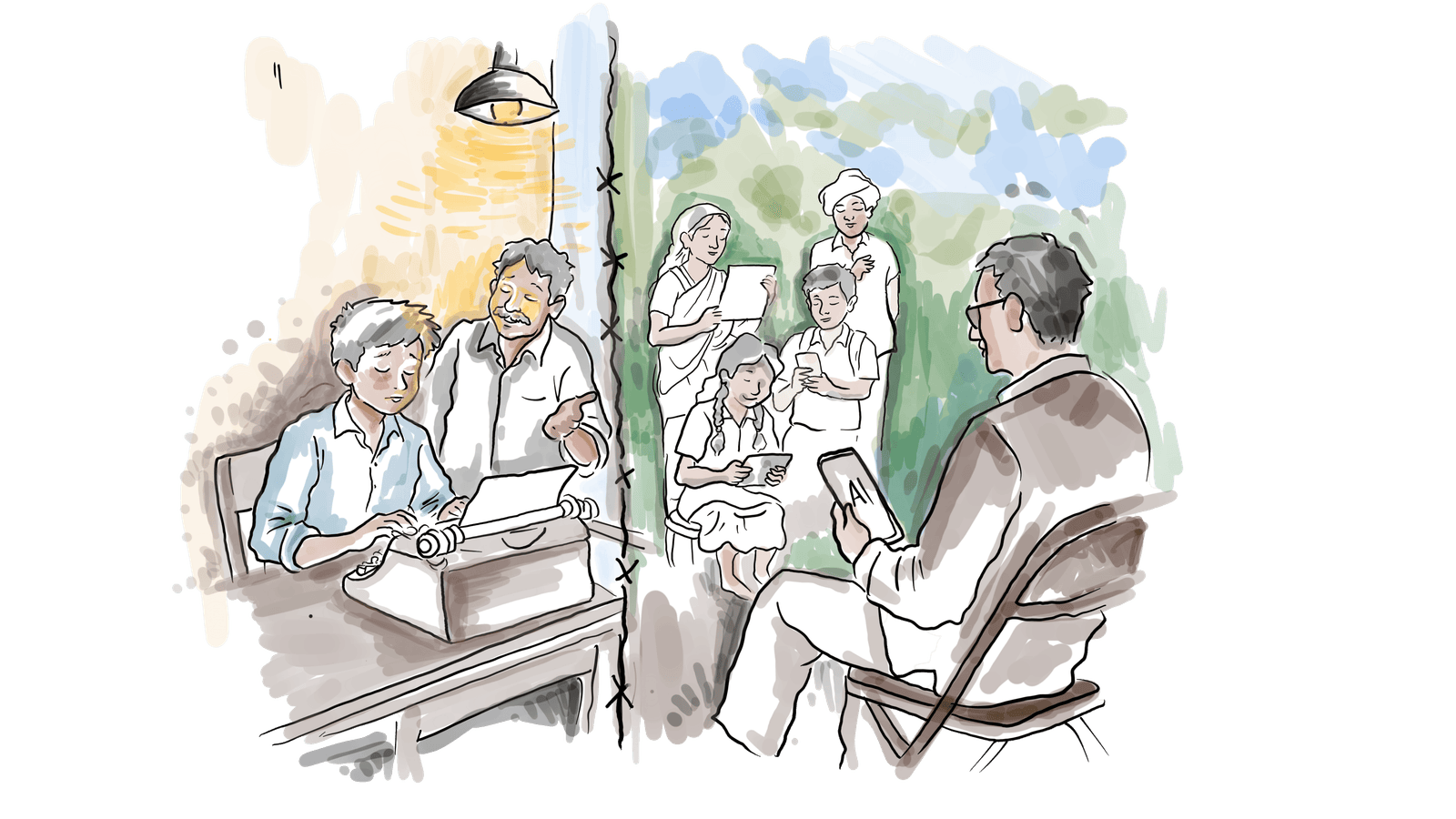
Sunbird Trust works in the conflict affected and remote areas of North Eastern India. The intervention is primarily in the Education field. I started living and working in Mualdam village in Dima Hasao district, Assam. When I first came here in 2021, we didn’t have a network/internet connection. When the internet finally arrived in May 2023, the transformation was immediate. What happened in December 2016 across the country, it happened in May 2023 in Mualdam. An internet crazy society was instantly formed. Within 2-3 years, nearly 80% of households had at least one smartphone. People quickly learned how to navigate the digital world, streaming videos, downloading apps, and consuming large amounts of data daily. In many ways, the digital revolution that India experienced years earlier arrived suddenly in Mualdam.
My role was to set up the school and work closely with the teachers and the school leader to develop Haite Memorial Friendship School. At the organisational level, I also look into recruitment, social media, and some projects.
During a recent recruitment process for school leadership roles, I presented candidates with a scenario: a group of motivated teachers wanted to deliver better lessons but struggled to find time for planning due to household responsibilities such as farming, cooking, collecting firewood, and caring for family members. A proper lesson plan for an experienced teacher takes 25–30 minutes per class, which adds up to over two hours of preparation daily. Despite their intent, teachers were often coming to school unprepared. When asked how they would address this, most candidates focused on motivation, supervision, or training; but none mentioned using technology or AI to simplify lesson planning.
It tells us how far behind we still are in acclimatising ourselves to technology and AI. There are multiple schools of thought about the use of AI in education. One believes that AI is killing critical thinking and slowly numbing our ability to think deeply. On the other hand, there are those who believe that AI is the only way to bridge existing gaps and move towards building a more just society. AI in education can be a game changer for educators. Many elite schools have already adapted to it and are using it extensively. I do agree with the first school of thought to some extent. At the same time, I also believe that AI is here to stay, and eventually all of us will have to learn how to use it. If I have to evaluate the situation, I see far more benefits in using this technology responsibly.
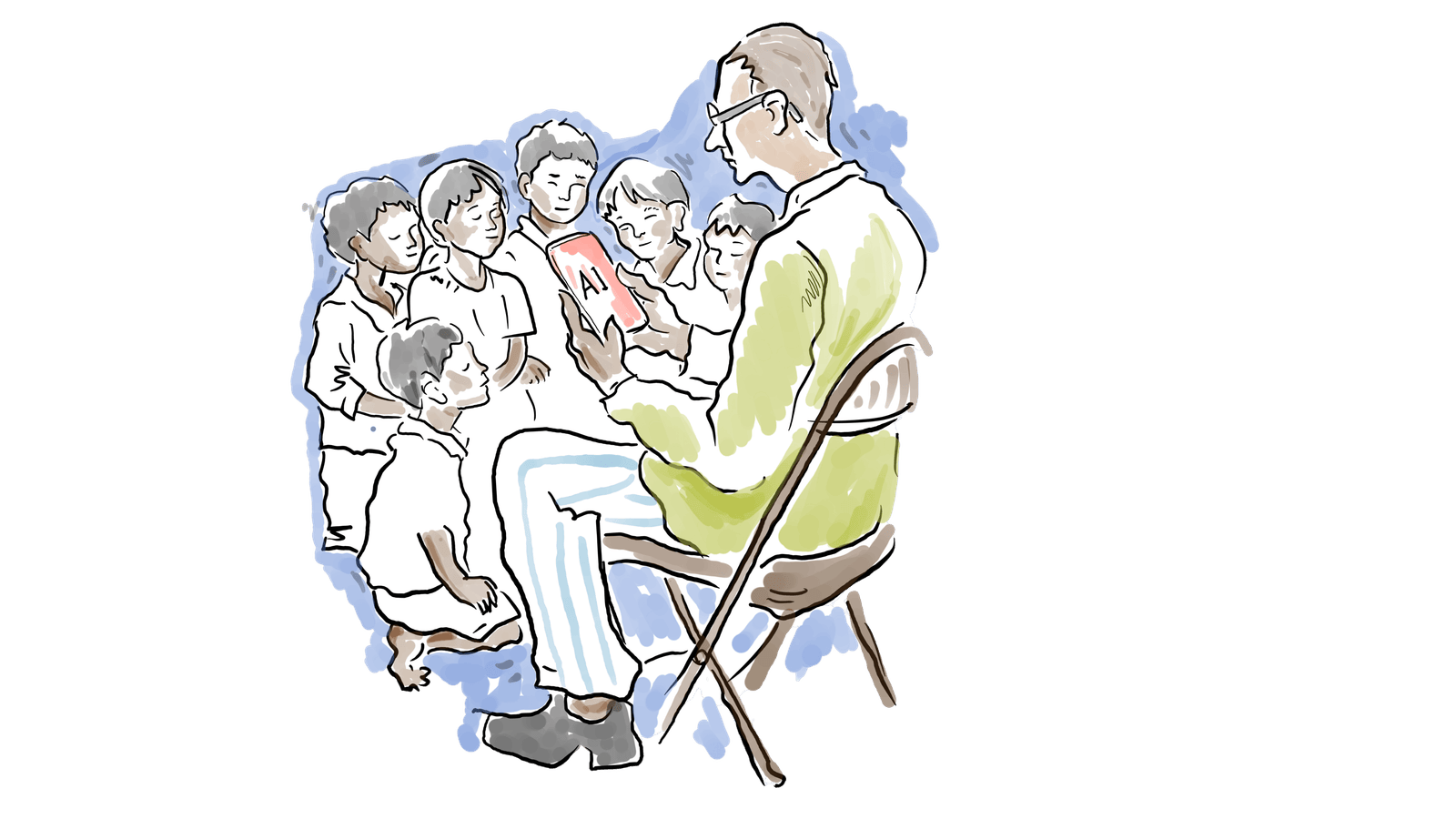
Back at our school in Dima Hasao, in 2024, we had a volunteer from Lucknow named Rumaan, who came to teach mathematics. In a short span of time, he built strong relationships with both teachers and students. Beyond teaching, he introduced the school to practical digital tools; teaching the principal how to manage attendance on Google Sheets and guiding teachers on how to use ChatGPT. This exposure created a noticeable shift. Teachers began using AI to research topics, prepare lesson plans, generate assignments, build notes, summarise content, design posters, and plan events. Tasks that once felt time-consuming and difficult became manageable, and teachers grew more confident in taking initiative. While they experimented with multiple tools such as ChatGPT, Meta AI, Gemini, and Perplexity, they found ChatGPT to be the most useful in their day-to-day work.
“I have been using ChatGPT to prepare my lessons. Recently, I took a picture of a lesson and attached it to ChatGPT and asked it to generate fill-in-the-blanks and MCQs for that lesson, as the chapter did not have any at the end.”
— Rinkimi Ngamlai
“I have used ChatGPT to generate music. Whenever we have guests coming to our school, we sing songs for them. What I do is write a prompt and ask it to generate lyrics. I then use those lyrics in an AI-enabled app, Suno AI, to generate music based on the lyrics. We give the lyrics to the students and play the music for them to practise and sing on the day of the guest’s visit.
I also make posters for school functions, admissions, and other events, and I have been using AI apps to make them. It takes only a few minutes to generate what I need, and I am able to make them much faster. I also use it to find the easiest way to explain concepts. I teach Social Studies, and the topics are vast, so I use Gemini or ChatGPT to write key points, shorten them, and create MCQs.”
— Hudson Ngamlai
“I have been using it to make worksheets, search for ideas, and make plans.”
— Azaine
In the same year, a Teach For India fellow launched an AI tool called FalconAI for teachers. It generates lesson plans, scaffolded assignments based on Bloom’s taxonomy, and lesson summaries. We demoed it and really liked the product for our use. However, before we could get our hands on it, they changed their subscription model, which was not viable for us.
But what FalconAI showed us was what was possible. For decades, teacher training organisations have been training teachers to bring planning into their classroom practice, but because it is time-consuming, many teachers never took it up seriously. With tools like this, teachers can sit and plan for four classes in less than 30 minutes and spend another 30–40 minutes understanding and preparing it. Just an hour a day can improve their classroom delivery exponentially. Teachers appreciate this because, at the end of the day, they also want better results and growth in their classrooms.
Artificial intelligence will not replace teachers, nor should it. However, it can become a powerful support system, especially for those working in the most challenging contexts. For decades, education reform has focused on training, monitoring, and accountability. While these remain important, AI offers something fundamentally different; the ability to significantly enhance a teacher’s capacity within minutes. If used thoughtfully, it has the potential to become one of the most powerful equalizers in education, particularly for teachers in remote communities who have always had to do more with less.