Introduction
A persistent issue in the development process is that progress does not adequately reach the most vulnerable sections of society. Rural and hard-to-reach areas often remain excluded due to systemic barriers, creating what is widely known as the last mile problem.
Artificial Intelligence (AI) has emerged as a transformative tool capable of addressing this challenge. By enabling innovative and scalable solutions across sectors, AI can help extend essential services to populations that have traditionally been left behind.
Understanding the Last Mile Challenge
The last mile refers to the final gap between service providers and the communities that need these services the most. This gap is shaped by several interconnected challenges. Many communities face limited access to healthcare, education, and financial services. There is also a shortage of skilled professionals such as doctors and teachers in rural areas. In addition, weak infrastructure—including poor roads, unreliable electricity, and limited internet connectivity—further restricts access to essential services. Together, these barriers prevent equitable development.
Role of AI in Community Development
Artificial Intelligence can play a critical role in improving access to essential services across sectors.
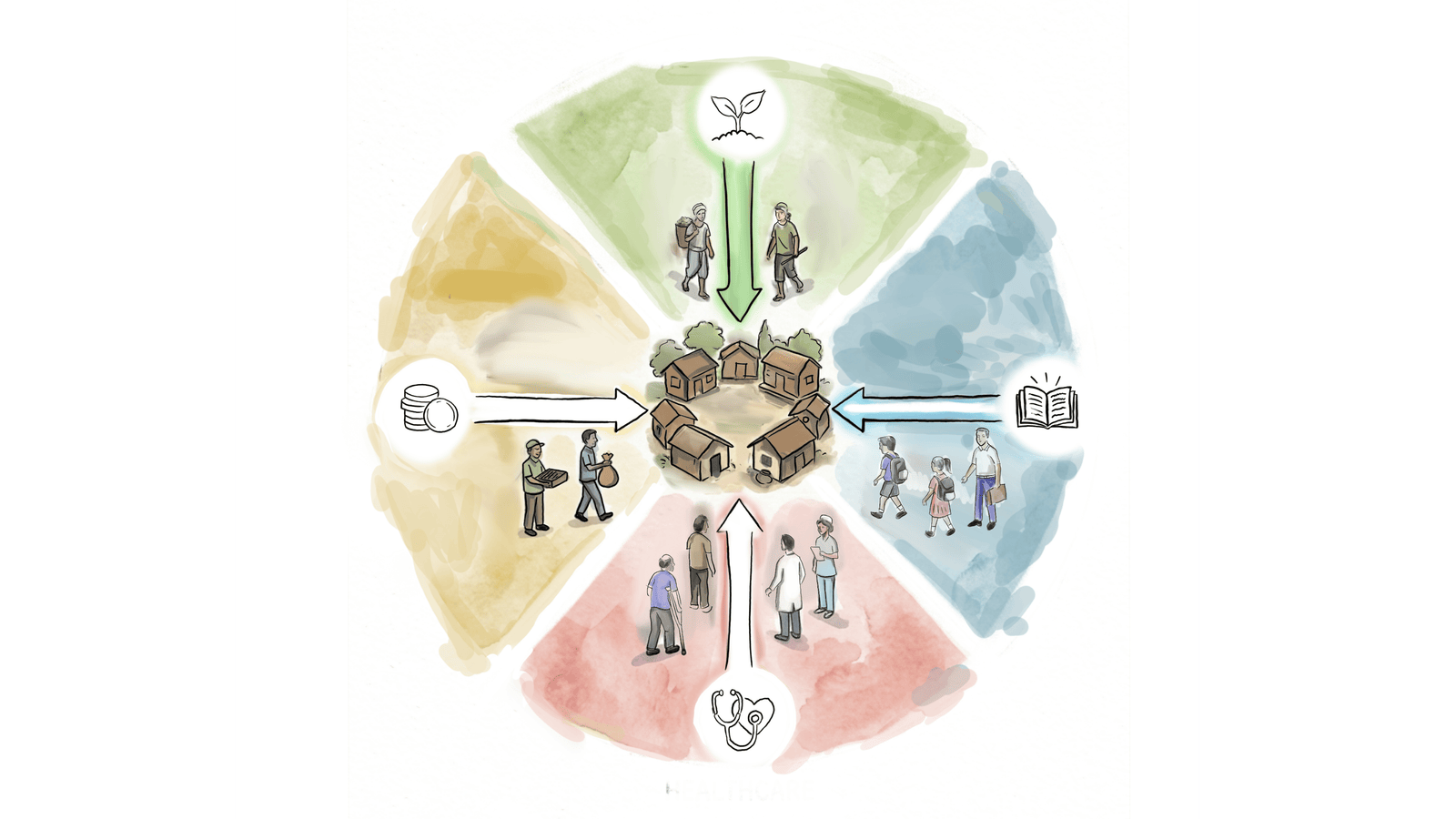
In healthcare, rural populations often struggle with long distances to medical facilities, high costs, and delayed diagnoses. AI can support early disease detection, enable telemedicine services, and improve the management of digital health records. Mobile health units equipped with AI tools can bring healthcare services directly to people’s doorsteps.
In education, challenges such as teacher shortages, limited learning materials, and language barriers hinder learning outcomes. AI can enable personalized learning tailored to individual needs, provide multilingual support, and assist teachers with smart tools. Establishing village-level learning centres powered by AI can significantly improve access to education and skill development.
In agriculture and livelihoods, farmers frequently lack access to reliable weather forecasts, soil analysis, and real-time market information. AI solutions can provide timely weather updates, insights into soil health, and accurate market price information. Voice-based AI systems further enable farmers to ask questions in local dialects and receive instant, practical guidance.
In financial inclusion, many communities remain excluded from formal banking systems, lack credit history, and face risks of fraud. AI can support alternative credit scoring, strengthen fraud detection, and offer personalized financial advice. It can also enhance the functioning of Self-Help Groups by improving financial management and access to services.
A People-Centered Approach
For AI to be effective in last-mile development, it must be rooted in the realities of the communities it serves. Community participation is essential in both planning and implementation, ensuring that solutions are relevant and accepted. Technologies must be simple, affordable, and accessible. At the same time, building digital literacy and local capacity is crucial so that communities can confidently use and benefit from AI-enabled solutions.
Implementation Challenges
Despite its potential, the use of AI in last-mile contexts comes with challenges. Infrastructure gaps such as unreliable electricity and limited internet connectivity can restrict deployment. There are also issues of awareness and trust, as communities may hesitate to adopt unfamiliar technologies. Additionally, safeguarding data privacy and ensuring responsible use of information are critical to building long-term confidence.