Introduction
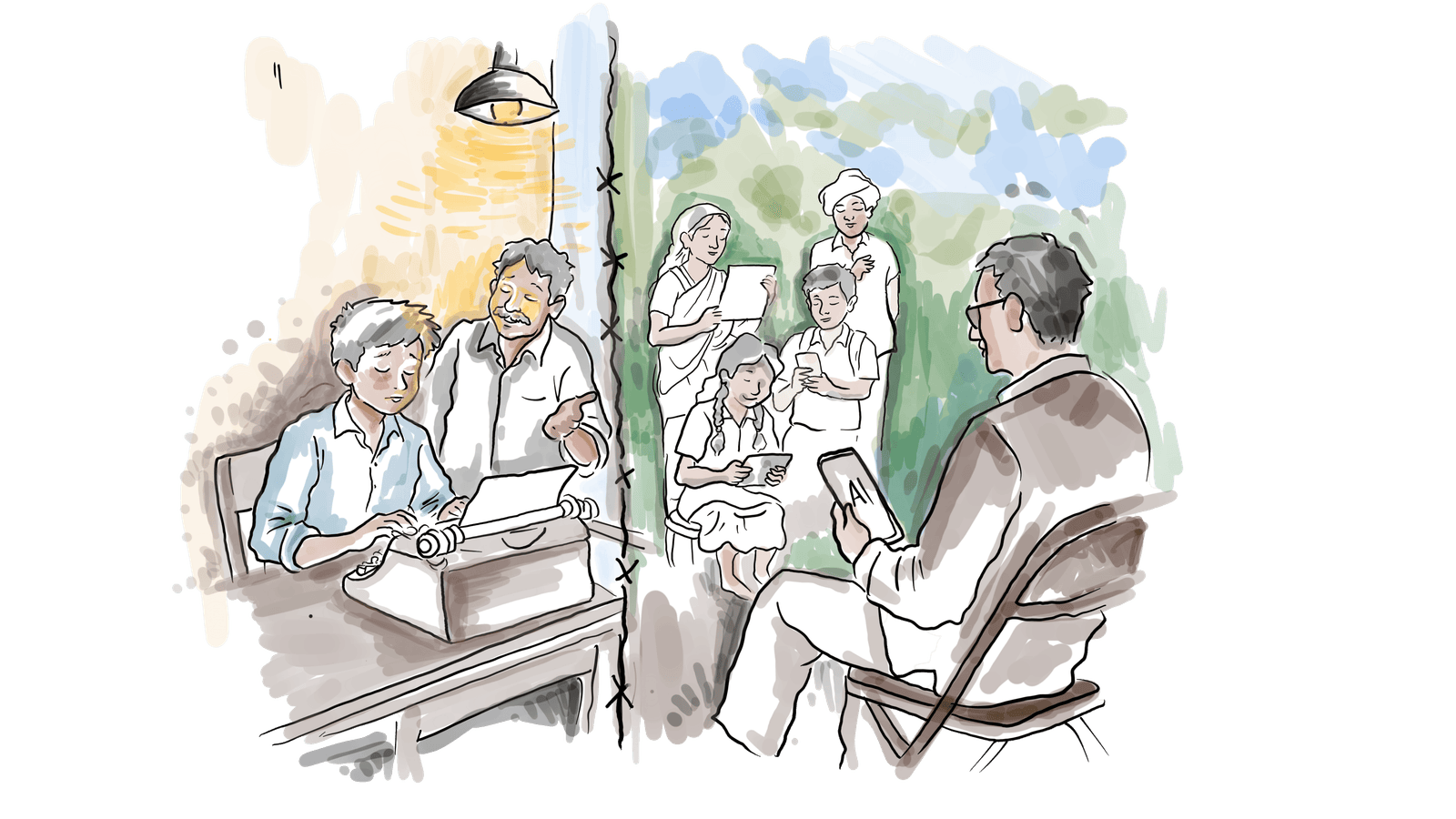
After finishing my matriculation, my father told me to enrol in a typing school. I wasn't happy about it. Typing felt dull and mechanical. I pushed back, and he compromised: learn computers instead. The irony was that learning computers back then meant almost the same thing. Fingers on a keyboard, just with a fancier machine.
Typing schools were perfectly ordinary in those days. If you wanted office work, you learned to type. Today, that world feels almost unimaginable. Nobody signs up for typing classes anymore, and yet nearly everyone can type — children, grandparents, people who've never thought about it once.
That happened because of something deeper: the democratisation of technology. Skills that once required formal training quietly became invisible, built into everyday life. Over twenty-five years in technology, I've watched this happen more than once. Two moments stand out: the democratisation of technology itself, and something even bigger unfolding right now, the democratisation of knowledge.
The Internet and the Reinvention of Commerce
When I graduated from engineering, the dot-com boom was in full swing. I joined a start-up with a genuinely exciting idea: selling Indian sarees to customers worldwide through the internet. We were so convinced demand would pour in that we named the website "SareeWorld..com". It failed badly.
The reason, looking back, is obvious. We built the website and ignored everything else: logistics, payments, customer trust. We believed that putting ".com" on a business would make it work digitally. Thousands of companies made the same mistake.
But the idea survived. E-commerce didn't disappear. It grew up and rebuilt retail from scratch. Capital, location, and physical scale had always controlled traditional retail. Digital platforms began dismantling those rules, letting small businesses and individuals reach customers they never could have before. The internet had democratised commerce.
Mobile Technology and the Democratisation of Computing
Something similar happened with communication. In the early 2000s, owning a BlackBerry wasn't just a purchase. It often required company approval. BlackBerry had mastered the art of delivering secure messaging over painfully slow 2.5G and 3G networks. It was genuinely impressive engineering.
Then 4G arrived, bandwidth became abundant, and the iPhone walked into that moment. The iPhone wasn't just a better phone. It was a different argument about what technology was for. For decades, computers had been built for institutions and trained professionals. The iPhone rejected that entirely. It responded to touch and instinct, assumed nothing about your background, and declared that technology should bend to people, not the other way around. Computing had been democratised.
A Taxi Ride and the Value of Local Knowledge
I still remember a yellow taxi that carried my family from the airport into Calcutta when I was young. The driver was remarkable, not just for navigation, but for everything else: city history, neighbourhood folklore, shortcuts no guidebook would mention. His value came from knowledge built quietly, year after year.
That knowledge lives somewhere very different now, on TripAdvisor, Google Maps, YouTube. Accessible to anyone with a phone. The information didn't disappear. It moved from individuals into systems. And the people whose livelihoods depended on that personal, accumulated expertise have found their position quietly eroding.
This is a small mirror of something much larger. Just as digital platforms absorbed local knowledge, AI is beginning to absorb domain expertise itself: legal reasoning, medical knowledge, financial analysis. The pattern is the same. The scale is not.
The Democratisation of Knowledge
For most of human history, expertise was valuable because it was hard to get. AI is now changing that. Knowledge can be searched, summarised, and generated in seconds. Complexity that took years to master can now be accessed instantly. Knowledge itself is being democratised.
This raises a question worth sitting with: if knowledge becomes universally available, what remains distinctly valuable about being human?
History offers some reassurance. Libraries have existed for centuries. The internet made information freely available for decades. Neither made everyone equally wise. The bottleneck was never really access. It was curiosity. Not everyone thinks to ask the deeper question or has learned to push through confusion and keep going. Learning is a habit, and habits require curiosity, discipline, and a willingness to be uncomfortable. Those are deeply human things, and they become more valuable, not less, as knowledge grows abundant.
There is another quality that may matter even more: empathy. As AI becomes capable of answering questions, writing, and analysing data, the most distinctly human contribution shifts toward understanding people, not processes. Empathy surfaces problems that data cannot. It recognises what someone actually needs before they have found the words. It shapes systems that treat people as people, not inputs. The next phase of technology may be less about building more powerful tools, and more about building more humane ones.
Conclusion
As technology and knowledge become available to everyone, the traditional markers of advantage, what you know and what tools you have, may matter less. What may matter more is the kind of person you have become: curious, disciplined, empathetic, and thoughtful enough to use powerful tools with care.
The next chapter will not be written by machines alone. It will be written by who we choose to become while building and using them.
And that choice is still ours.