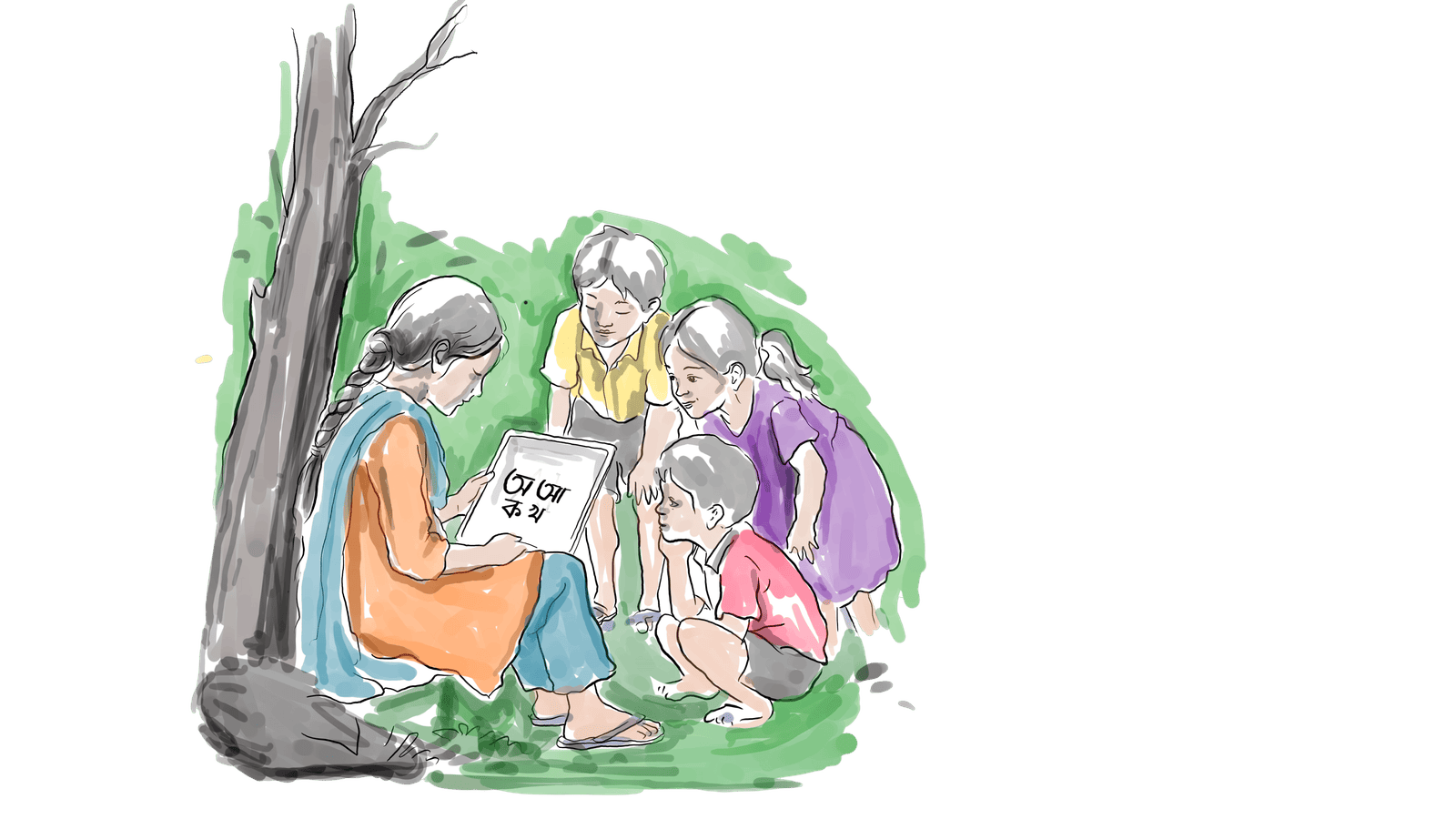
On a bright sunny day in May, with golden trumpets blossoming and birds chirping, the children sat around a table in the classroom, working on their vocational homework while listening to modern Bollywood songs. Sreya, one of the teachers guiding them, sat with us and said, “They love it when the monsoon kicks in. They have adapted with the floods and trained themselves to be good swimmers. They enjoy the rain as much as their parents curse it. Their innocence is what motivates us to work for them every day. But the dark days of disaster diminish the hope that the kids of Majuli will be at par with the kids of metro cities. And for us, we are trying our best to teach them everything they need to learn in order to survive in the society.”
The brief account was of Hummingbird School in Majuli, where we were studying how climate change contributes to recurring floods and affects the lives of school children. But the visit showed us the plight of the families of these children who live with the constant threat of displacement, loss, and uncertainty. In the floodplains of Assam, disaster is not a distant possibility—it is an annual certainty. From the submerged villages of Cachar to the fragile riverine landscape of Majuli, floods continue to affect communities across Assam, yet mitigation measures remain unclear. In recent years, the introduction of AI-enabled tools such as the RAHAT (Rapid Action for Humanitarian Assistance in Tragedies) application in Cachar district of Assam has signalled a shift toward technology-driven disaster management. Yet, as promising as these innovations appear, their true test lies not in their design, but in their ability to function where connectivity, infrastructure, and access are deeply uneven.
Is AI just a band-aid on a bullet wound in disaster management?
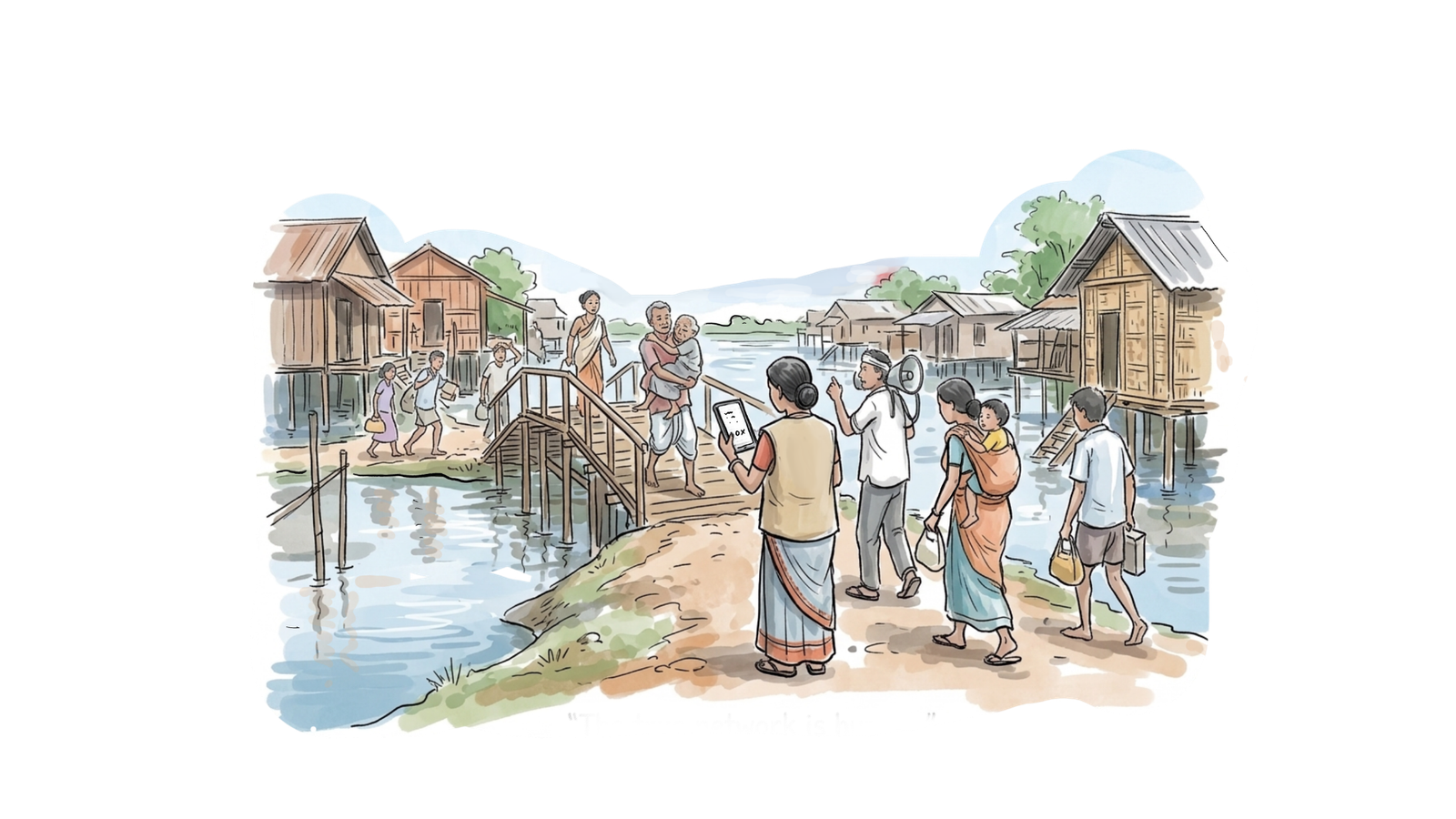
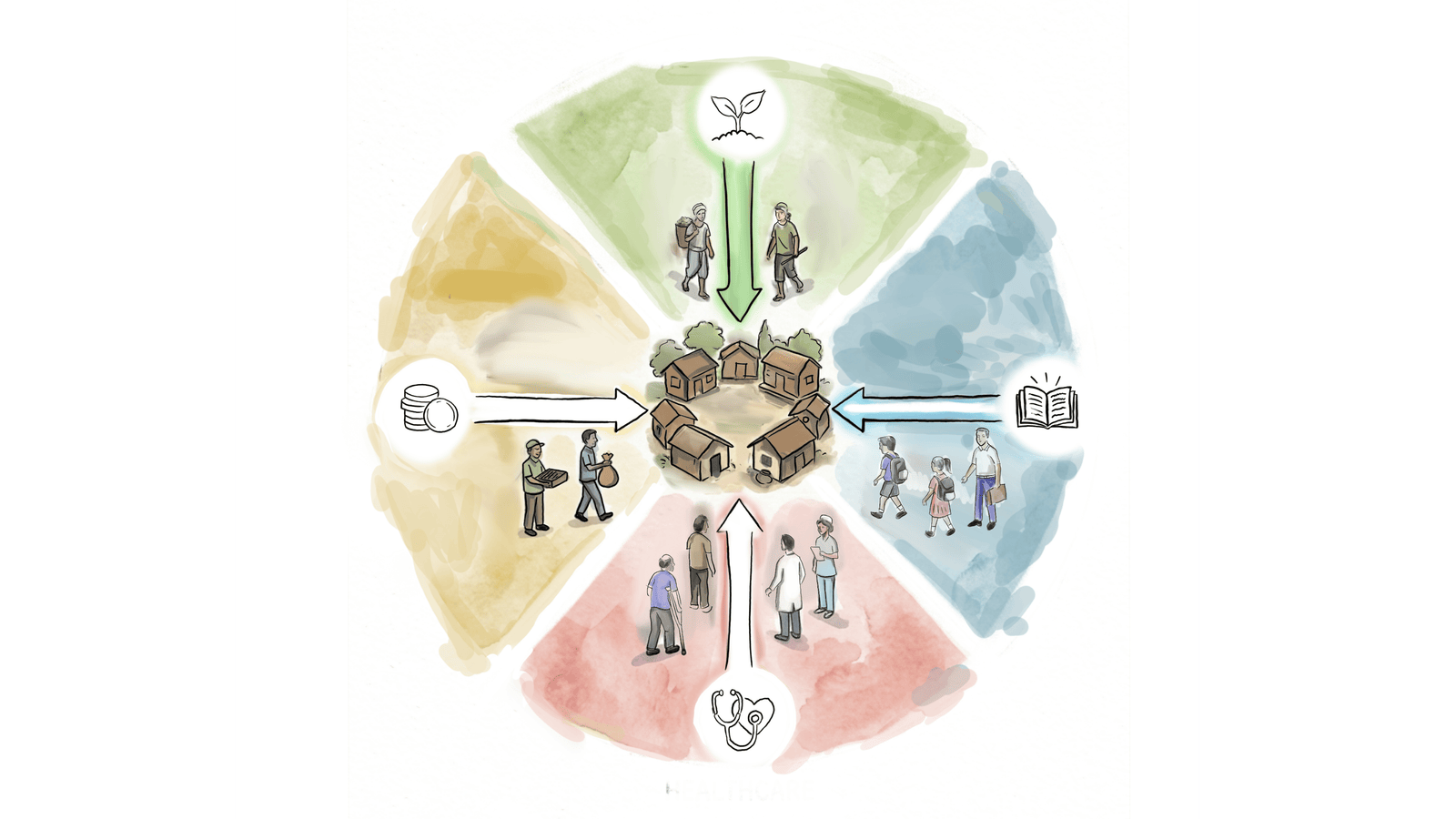
Disaster Management related to floods in Assam is a mammoth task for the authorities to tackle with. Applications like RAHAT have undoubtedly helped the authorities to ease the situation but the branding of the efficiency of the application is not equivalent to the success of the same in the real-life scenarios. For such ideas to function meaningfully in places like Majuli, it must be embedded within: Local volunteer networks, Self-help groups (SHGs), community leaders and frontline workers. They can interpret and disseminate information, assist in data collection and bridge gaps in digital access. Here, AI becomes a back-end enabler, while communities remain at the forefront of response. This is because often at times of disaster related crisis, the affected areas often face with severe issues of internet connectivity, network issues and even availability of electricity to charge their smartphones or other electronic applications. Here, using the app becomes a superficial task for the people who neither have the network nor the battery power needed to use the app. Moreover, most of the people lack the basic knowledge of using such apps. So, in order for AI based apps to function in such areas, they need to be designed smartly.
Beyond Apps; The Role of Community Intermediaries
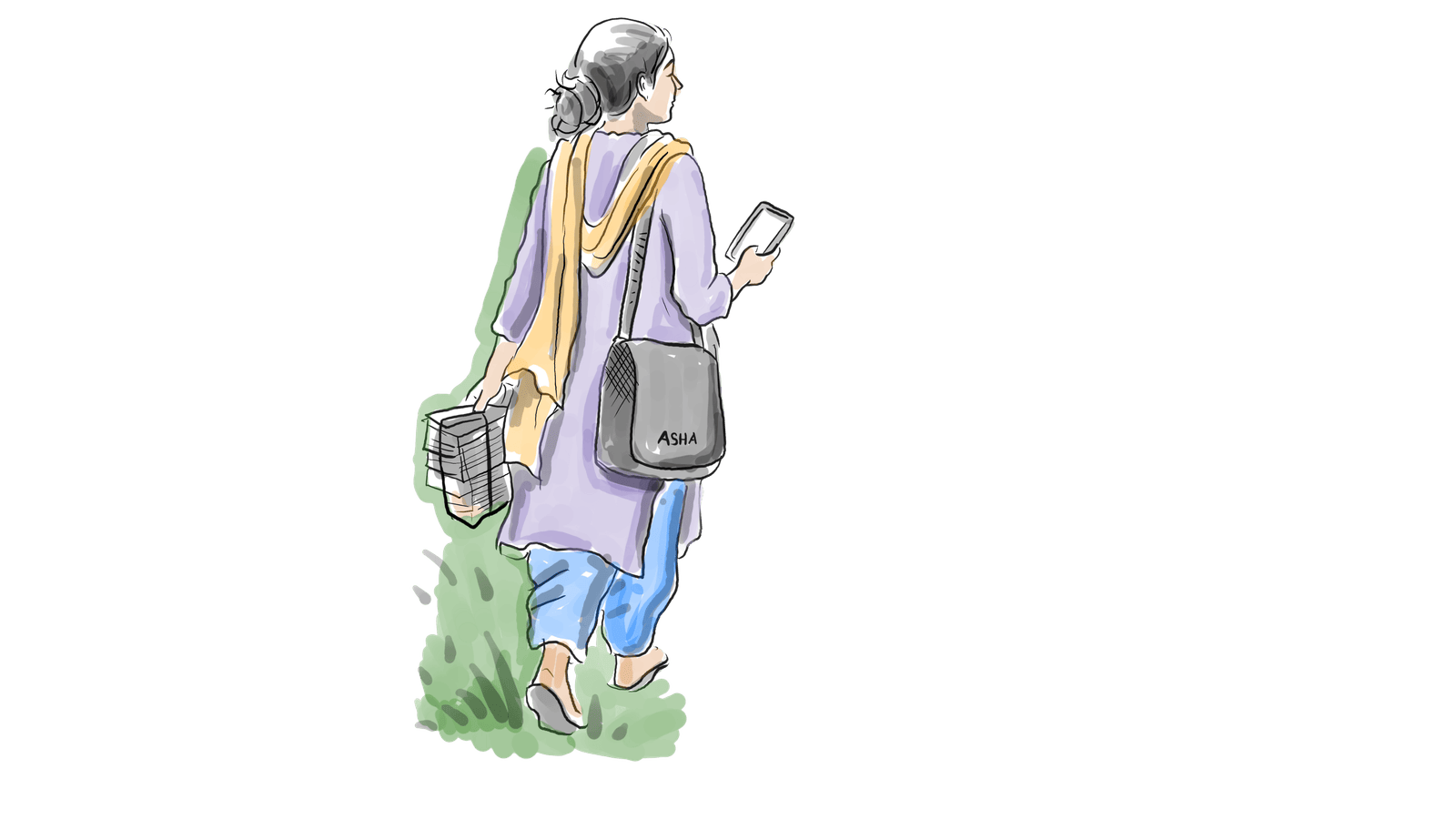
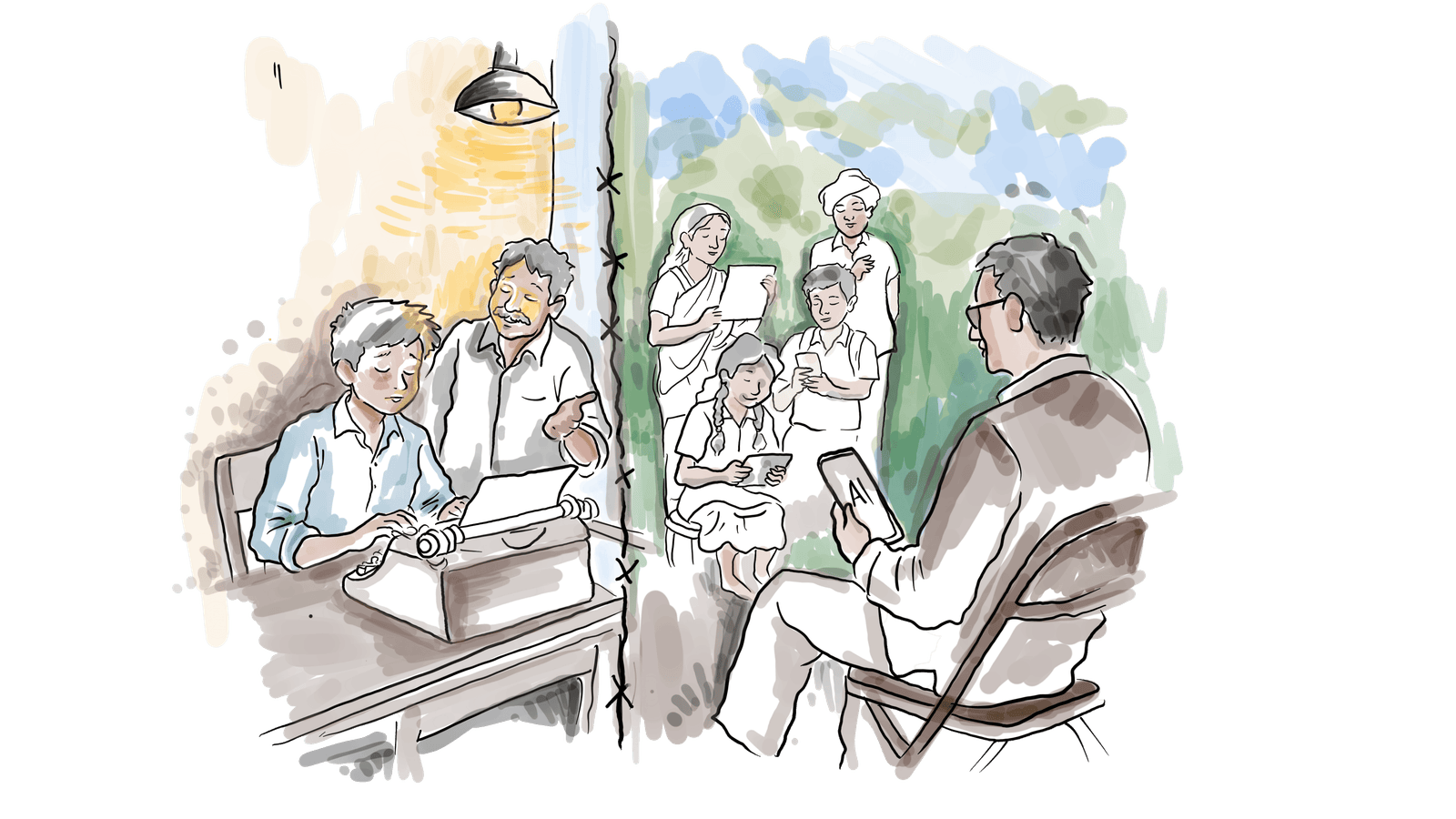
AI and tech driven systems in such flood affected areas need to use an offline-first approach, where data like damage reports and relief details are stored on the phone and uploaded later when network becomes available. In extreme situations, phones can form mesh networks, sharing information with each other via Bluetooth or Wi-Fi until it reaches someone with connectivity. Even without internet access, alerts can be delivered through SMS or voice calls (Interactive Voice Response—IVR), ensuring inclusion for users with low literacy or without smartphones. Information can also be spread through community radio, loudspeakers, and local volunteers, making the system more inclusive. Some AI tools even work directly on the device (edge AI) to give basic guidance like evacuation urgency. But again, the earlier mentioned challenges like battery life, device access, and training for the common masses to use such apps remain. This is why the most effective approach in Majuli is a hybrid model—where technology supports officials and volunteers, and information is delivered to communities through human networks, making disaster response both digitally coordinated and locally grounded. During floods, when connectivity breaks down and access to smartphones is uneven, local actors such as volunteers, self-help group (SHG) members, community leaders, and frontline workers become the real backbone of the system. While the app may collect and store data offline or generate alerts, it is these people who interpret the information, spread warnings through word of mouth, help with evacuations, and ensure relief reaches the right households. Messages generated digitally can be shared through voice calls, loudspeakers, or community radio, making them accessible to everyone, including those who cannot use apps. This creates a hybrid model, where technology supports coordination in the background, but action happens through trusted human connections on the ground. In such contexts, disaster response becomes not just a digital process, but a community-driven effort that is digitally supported and humanly delivered. At present, there are no widely operational AI applications in these areas, even apps like RAHAT being closed on Play Stores recently after about one year of usage. The monitoring and continuity of such innovations comes under the responsibility of the authorities concerned, who must ensure that such technologies are maintained and accessible, especially during crises, and how well maintained such technologies are, in order for them to sustain in the long run. Institutions like the Hummingbird school in Majuli are trying their best to build resilience amongst communities by reducing barriers in primary education and health of children during floods. But in the age of digitalization, communities need stronger support from technology, as well as from government and institutional systems, in order for them to face disasters like floods without fearing the aftermath. Until then, basic amenities like quality education, proper healthcare facilities and nutritious meals remain still a distant dream to the little ones residing in areas like Majuli, who haven’t stopped dreaming, but at the same time, are not able to soar their wings to reach their dreams due to barriers build by nature and further overlooked by the society.