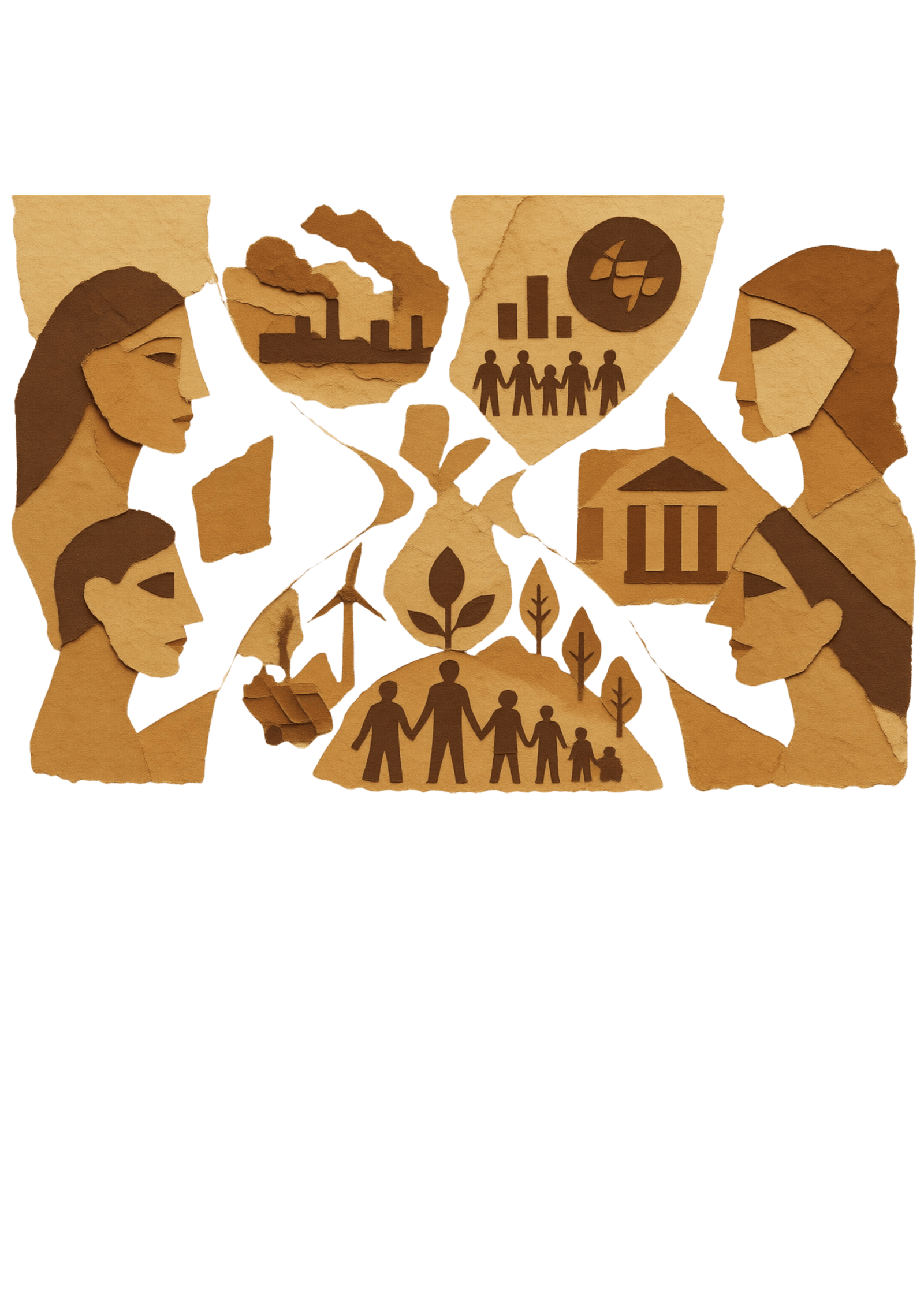
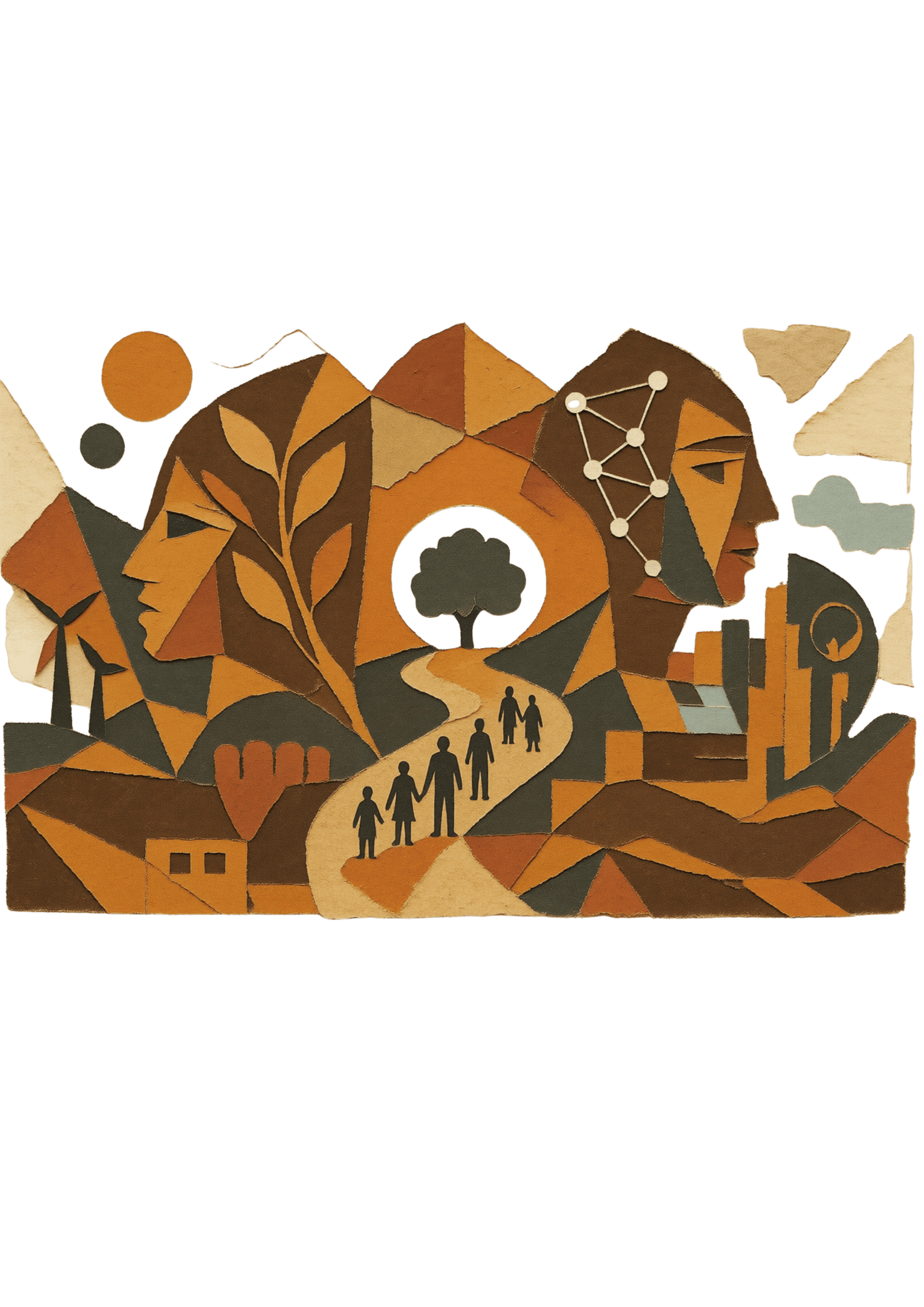
As the world approaches the 2030 deadline for the Sustainable Development Goals, the development community faces a harder question than which targets remain unfinished: how should development itself be rearchitected for a world reshaped by climate change, artificial intelligence, demographic transition, rapid urbanisation, pandemics, and geopolitical uncertainty? The SDGs created a shared global language for development, but they also exposed the limits of target driven approaches that too often rewarded outputs over institutional capacity, projects over systems, and beneficiaries over active citizenship. India's experience offers lessons for the post-2030 agenda. Over the past decade the country has combined large scale public programmes with digital innovation, community institutions, and mission driven governance. According to NITI Aayog, India's SDG Index score rose from 57 in 2018 to 71 in 2023-24, and an estimated 248 million people were lifted out of multidimensional poverty between 2013-14 and 2022-23, proof that scale and inclusion can coexist under strong public systems. Yet climate vulnerability, learning loss, nutritional gaps, urban inequality, and uneven institutional capacity persist, a reminder that development cannot be measured by targets achieved alone. This article argues that the post-2030 agenda must move beyond delivering services toward building resilient communities, capable institutions, ethical technologies, and citizen led governance. India's next contribution to global development may not be another flagship programme but a philosophy: development succeeds when communities become architects, not merely recipients, of their own future.
When the United Nations adopted the Sustainable Development Goals in 2015, the world believed that ambitious global targets could accelerate collective action against poverty, inequality, and environmental degradation. Fifteen years later, as 2030 approaches, the question is no longer whether the SDGs succeeded or failed. It is whether they are sufficient for the world we now inhabit. The answer is increasingly clear: they are not.
The world of 2030 is profoundly different from that of 2015. Climate change is no longer a future risk but a lived reality. Artificial intelligence is reshaping labour markets faster than education systems can adapt. Geopolitical conflict has disrupted global supply chains, while rapid urbanisation and migration place unprecedented pressure on cities and natural resources. The next development agenda must be designed not for a stable world, but for one defined by uncertainty and continuous disruption.
The SDGs have achieved important milestones. Access to electricity has expanded significantly worldwide and extreme poverty has declined substantially over recent decades, despite recent setbacks. In India, over 550 million Jan Dhan bank accounts have transformed financial inclusion, digital public infrastructure now enables billions of digital transactions a year through UPI, and initiatives such as the Swachh Bharat Mission have dramatically expanded sanitation coverage. These achievements show what political commitment, technology, and coordinated implementation can accomplish.
Yet the SDGs also revealed an uncomfortable truth: development cannot be sustained through projects alone. Too often programmes succeed while funding lasts but struggle to build durable local capacity once external support ends. The sector has grown adept at delivering services and less successful at nurturing institutions capable of solving tomorrow's problems. This is where the post-2030 agenda must fundamentally change.
Five Shifts for the Next Agenda
The first shift should be from beneficiary centric development to citizen owned development. Communities should no longer be viewed merely as recipients of services but as co-designers, decision makers, and custodians of development. India's Self Help Group movement, which now connects millions of rural women through community institutions, shows that lasting change happens when people collectively own solutions rather than receive them.
Second, we must move from funding projects to building institutions. Schools, Farmer Producer Organisations, panchayats, community based organisations, and local governments determine whether development persists long after a project concludes. Donors and CSR initiatives should invest not only in programme activities but in governance systems, leadership development, financial sustainability, and institutional learning.
Third, success should be measured not only through outputs and outcomes but through community resilience. How quickly can a village recover from a flood? Can local health systems respond independently during a pandemic? Can farmers adapt to changing rainfall patterns? These questions matter more than counting training sessions or beneficiaries reached. Climate resilience, institutional trust, and adaptive capacity deserve to become core indicators of development performance. Geopolitical disruption makes this more urgent still: supply chains can break down and external aid cannot always be relied on during a crisis. Communities that build self-sustaining solutions, biogas plants, solar power, rainwater harvesting, local seed banks, are better placed to meet their own needs when outside support is delayed. Local self-reliance should be a core part of how resilience is built, not an afterthought.
A fourth transformation concerns technology. Artificial intelligence should not be viewed primarily as a substitute for human workers but as a force multiplier for frontline professionals. Teachers, ASHA workers, agricultural extension officers, and community mobilisers remain the backbone of India's development ecosystem. AI can help them diagnose learning gaps, predict disease outbreaks, personalise agricultural advice, and reduce administrative burden, but human relationships, empathy, and trust remain irreplaceable. AI systems should be designed with human values and fairness built in from the start, not added later as a safeguard, or the same tools that promise efficiency could just as easily deepen mistrust or leave people behind.
Finally, the future demands a shift from fragmented interventions to ecosystem partnerships. No single actor, government, philanthropy, CSR, NGOs, or markets, can solve complex challenges alone. The next decade requires collaborative platforms where each stakeholder contributes complementary strengths while communities retain agency. Philanthropy in particular should evolve from financing isolated projects to catalysing systems change: supporting innovation, evidence generation, institutional capacity, and policy learning.
India is uniquely positioned to shape this conversation. Its digital public infrastructure has shown how public digital goods can improve access and inclusion at scale. Its ASHA network has shown the value of community based health systems. Mission mode initiatives have delivered rapid progress in sanitation, vaccination, and financial inclusion. These experiences suggest that scalable development works best when technology, institutions, and community participation reinforce one another.
The next chapter of development will not be written by better indicators alone. It will be written by stronger institutions, empowered communities, ethical technology, and courageous leadership willing to rethink old assumptions. If the SDGs challenged us to leave no one behind, the post-2030 agenda must challenge us to build societies that no longer wait to be led but possess the capability to lead themselves. That may be the most enduring measure of development in the decades ahead.
The SDGs gave the world a common destination. The next development agenda must provide something equally important: the capacity of people and institutions to navigate whatever road lies ahead. Only then will development cease to be a race toward targets and become what it was always meant to be, a continuous process of expanding human capability, strengthening collective resilience, and enabling every community to shape its own future.