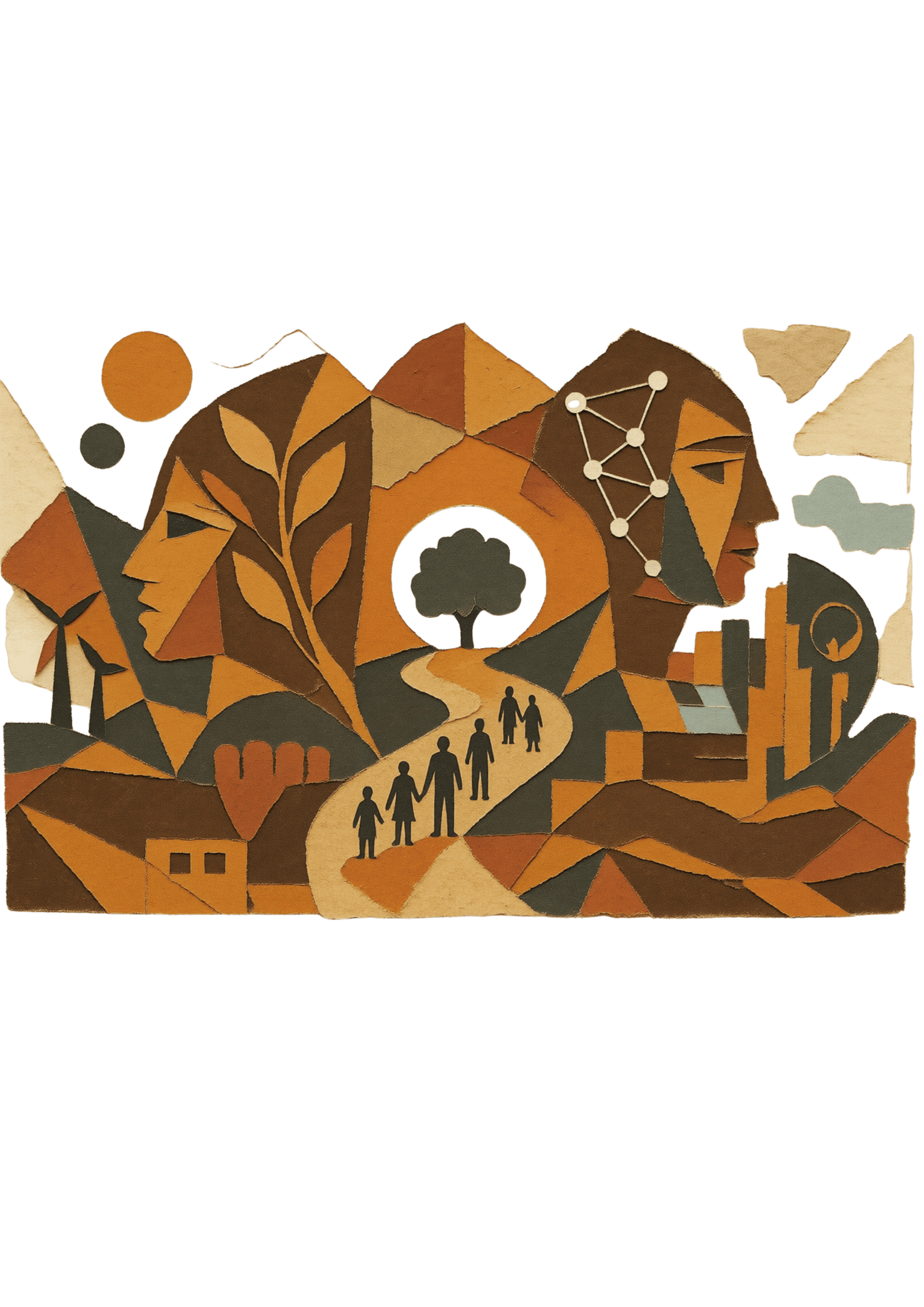
We are four years from the 2030 deadline for the Sustainable Development Goals, and the numbers are damning. Of the 169 SDG targets, only 35 per cent show adequate progress. Another 48 per cent show insufficient progress, and 18 per cent have slipped below 2015 baseline levels. The UN Secretary-General has called this a “development emergency.” At the current rate, the 2030 Agenda as a whole stands at serious risk of failure. These are global numbers. In Northeast India, they feel very local.
The Connectivity Mirage
India's digital story is often told in triumphant headlines. Active internet users have reached 886 million, with rural areas now making up 55 per cent of the total, surpassing urban India's 397 million users. The Northeast is growing fastest of all: Assam and Meghalaya have recorded internet growth of more than 20 per cent a year.
Connectivity, though, is not the same as usability. Nearly 41 per cent of India's population, roughly 630 million people, remains offline. In states like Meghalaya and Arunachal Pradesh, where rural communities make up close to 63 per cent of the population, owning a mobile data plan does not mean you can open an online grievance portal, sit through a telemedicine session, or stream a classroom video without interruption. Speeds are low, signals are unreliable, and devices are outdated.
The real gap is not bandwidth. It is design, language, and trust. An interface built in English, for urban users, on assumptions of digital literacy, falls apart the moment it reaches a farmer in a hill district. A field worker filling out a form she had no hand in designing, in a language not her own, for a purpose no one explained to her, is not being empowered. She is being processed.
The Data That Doesn't Come Back
Behind every digital tool an NGO deploys sits a database, and behind that database sits a question almost never asked: who is this data actually for? Over the past decade, development organisations across Northeast India have invested heavily in Management Information Systems, mobile data collection apps, beneficiary trackers, assessment dashboards. Data flows in from the field constantly. It gets cleaned, aggregated, sent to donors, and filed away. The communities who generated it rarely see it again.
This is the MIS gap. The 2025 SDG progress report itself notes that statistical systems remain chronically underfunded, treated as technical afterthoughts rather than foundational investment. If that is true at the national level, consider the situation at the village level, where communities have no systems of their own at all.
The result is a deep imbalance: programmes are shaped around what donors want to measure, not what communities want to change. Field staff spend hours feeding data into systems built for compliance reporting. Insights that could genuinely improve local practice stay locked in formats only people with laptops and login credentials can access. Communities generate the data. Institutions consume it.
What Comes After 2030
The post-2030 development framework is already taking shape. Formal deliberations at the UN are set to begin at the September 2027 meeting of the High-level Political Forum for Sustainable Development, as required by the Pact for the Future. The SDGs will not disappear; the new framework is expected to carry forward existing commitments under climate and biodiversity agreements rather than start from scratch.
There is a growing consensus, though, that the next framework must go further than its predecessor on one crucial point: ownership. A persistent critique of the current SDG agenda is its limited recognition of indigenous knowledge systems and its weak links to decolonisation, both of which shape how communities understand and pursue development. Increasingly, SDG localisation is being framed as placing local communities at the centre of sustainable development, grounding action in the principles of subsidiarity, inclusion, and multilevel governance, and ensuring data is actually available at the local level.
This is the opening. Northeast India, with its extraordinary linguistic and cultural diversity, remote geography, and long tradition of community led governance, is precisely the kind of place that could show what genuinely local development looks like.
A Framework Built from Below
What would a post-2030 framework look like if communities owned their own data rather than simply being measured by it? It would look like a village council tracking trends in its own agricultural output without waiting six months for an NGO report. It would look like a self-help group monitoring its collective progress in a language its members actually speak. It would look like digital tools that rural users had a real hand in designing and genuinely want to use. It would look like development measured from the inside, not handed down from above.
This is not idealism. It is a basic requirement. As long as communities remain objects of data rather than owners of it, the next set of global goals, however carefully designed, will repeat the MIS gap at scale. The data will flow upward. The insights will stay at the top. And the communities that generated the knowledge will remain, as they have too often been, the subject of someone else's story.
The Call
As we think about development beyond 2030, we have to ask a harder question than “are communities connected?” We need to ask: do communities have power? Power over their data. Power over the tools that shape their lives. Power to define what progress means in Assamese, in Bodo, in Mizo, in their own terms. The future is not something we wait for. It is something we build. And that building only means something if the people most affected are the ones holding the tools.
Sources & References
UN SDG Progress Report 2025, unstats.un.org/sdgs/report/2025; UN DESA, SDG Report 2025 Press Release; Sustainable Development Report 2025 (SDSN).
AFD, What Global Framework Will Replace the SDGs?; SDG Knowledge Hub, Building Momentum Towards 2030 and Beyond; OISE University of Toronto, After 2030: What Comes Next?; ORF, The Next Frontier: Post-2030 Development Agenda.
ORF, Internet Connectivity in Northeast India; IAMAI-Kantar, Internet in India Report 2024 (via MediaNama); Sambodhi, Bridging the Digital Divide in Rural India; Muft Internet, India Internet Usage Statistics 2025.
UN DESA, Inter-Agency Policy Brief on SDG Localization.