Across the eight states of Northeast India, Artificial Intelligence-powered welfare systems promise scale and precision. But a hard look at the data reveals a system that is efficient at 30,000 feet and brittle at ground level and the clock for a sustainable fix is ticking.
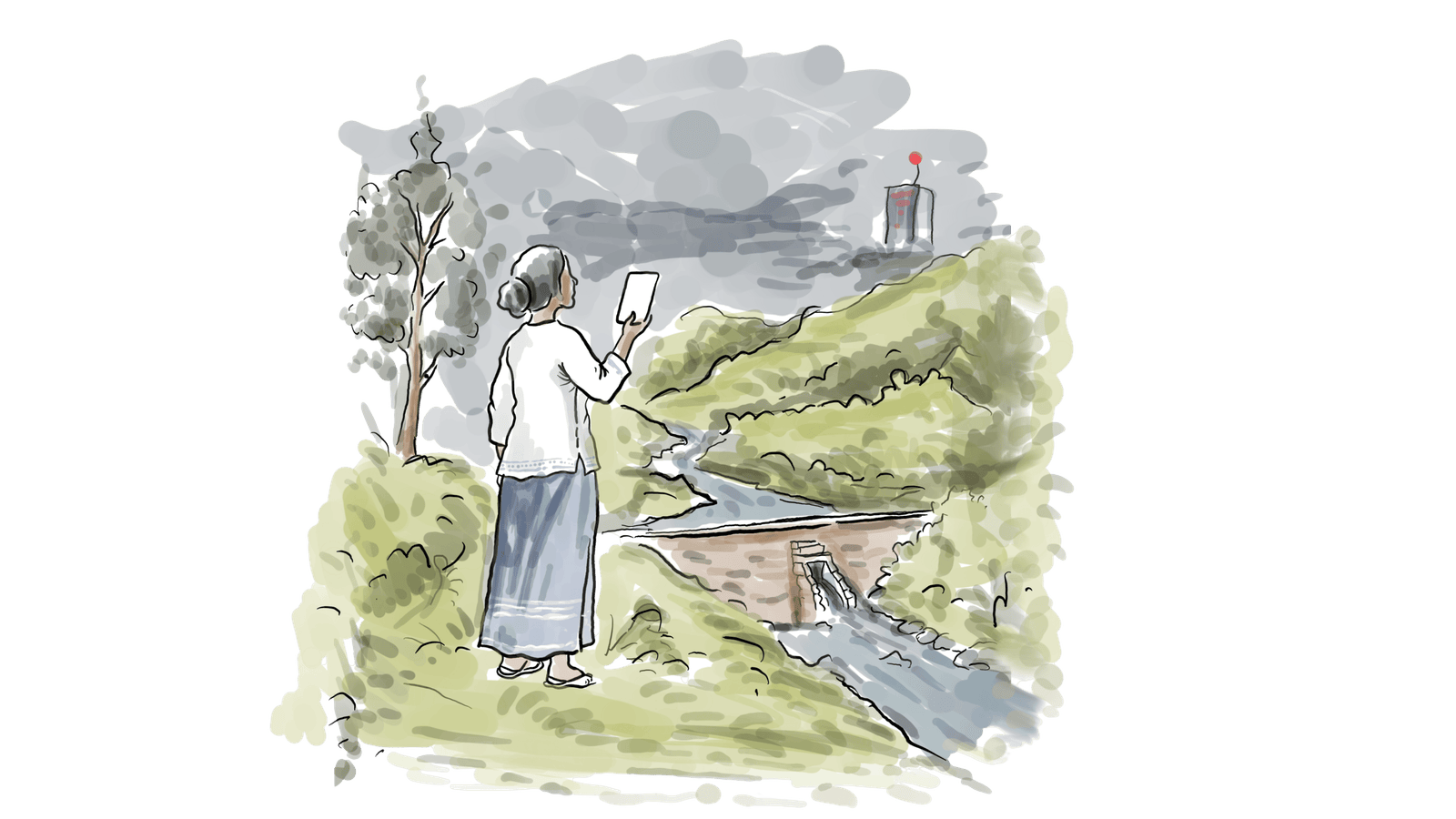
In the hills of Nagaland, a woman who spent six days building a check dam for her village received no wages that month. She had worked. The dam existed. But the photograph she submitted as proof was blurred due to cloud cover, and an automated system flagged it for rejection. No human reviewed the decision. The funds sat allocated but frozen, somewhere in a government ledger. This is not an edge case. It is the defining paradox of Artificial Intelligence (AI) driven development in Northeast India in 2025 and 2026.
The technology meant to reach the unreached is, in a growing number of cases, making them more invisible than before. And the economic stakes could not be higher. India's Economic Survey 2024-25, tabled by Finance Minister Nirmala Sitharaman, projects national Gross Domestic Product (GDP) growth of 6.4% for Financial Year 2025 (FY25), with private consumption expected to grow at 7.3%, driven substantially by a rebound in rural demand. Northeast India cannot contribute to that rebound if its citizens are locked out of the Digital Public Infrastructure (DPI) designed to serve them.
A Connectivity Gap That Precedes Every Algorithm
Before asking what AI can do here, one must confront what the infrastructure cannot. Northeast India holds barely 1.9% of India's total broadband subscriber base, roughly 19 million users against a national figure of one billion. The BharatNet mission has laid 6.92 lakh kilometres of optical fibre nationally, covering 2.14 lakh Gram Panchayats (GPs) according to Economic Survey data, but progress across the Northeast remains uneven. Assam has connected over 1,500 GPs. Nagaland and Mizoram report meaningful connectivity in fewer than 30% of their remote administrative blocks.
Even where a signal exists, quality is the enemy. In Manipur and Arunachal Pradesh, median wireless download speeds frequently fall below 10 Megabits per second (Mbps), which is inadequate for the real-time biometric uploads that modern welfare platforms demand. In rural Meghalaya, fewer than 4.2% of households own a computer, against a national urban average of 21.6%, according to the National Family Health Survey (NFHS-5). The Economic Survey notes that the government's digital connectivity initiatives have gained traction nationally, with fifth-generation (5G) networks now covering 779 districts and over 10,700 villages covered under the Digital Bharat Nidhi scheme by December 2024. The Northeast, however, remains at the trailing edge of that coverage map. These are not footnotes. They are the floor on which every algorithm stands.
Where The Technology Is Genuinely Working
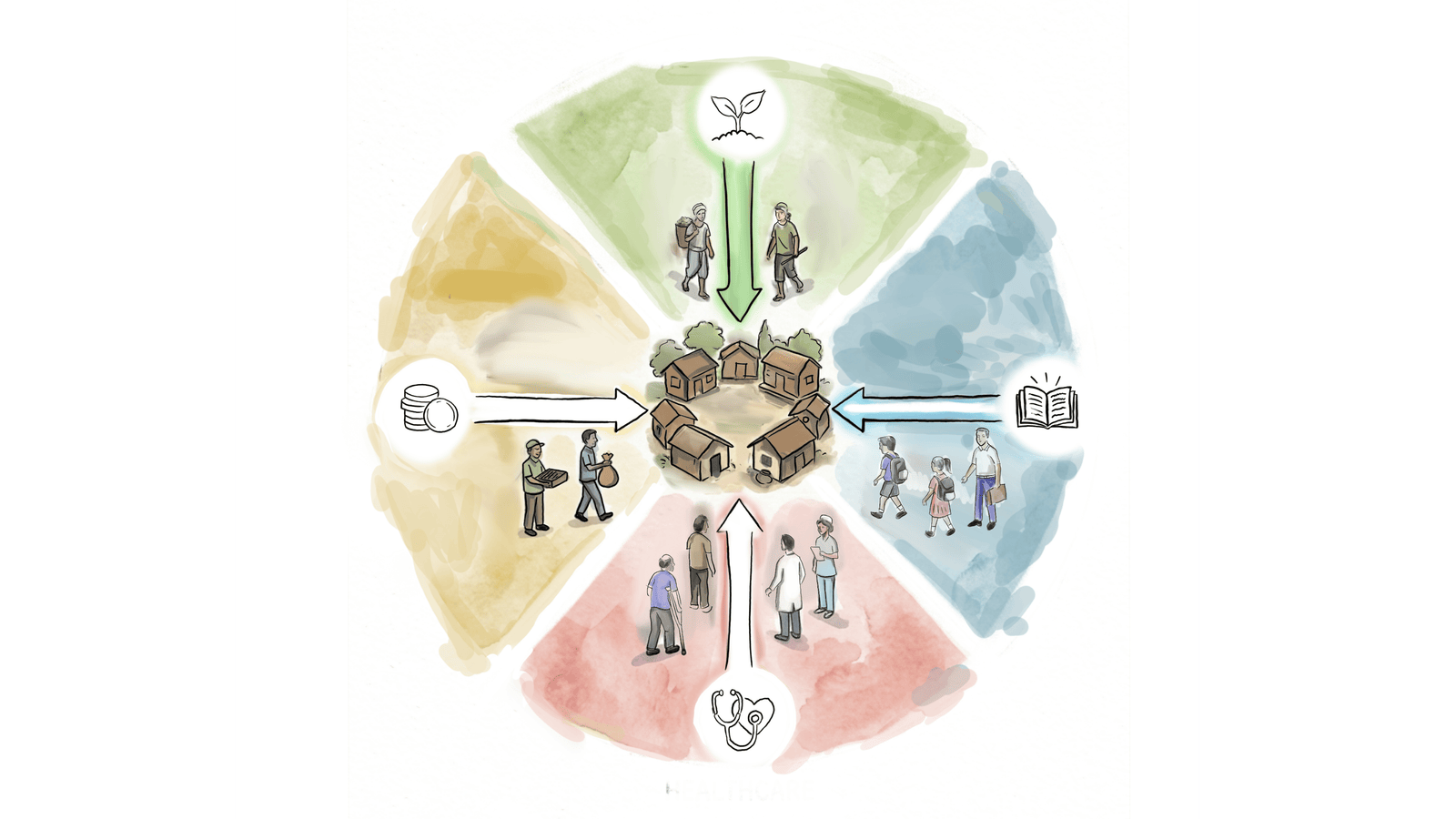
The picture is not uniformly bleak. Agriculture, which the Economic Survey projects to grow at 3.8% in FY25 driven by record Kharif production, is where AI is proving its most concrete value in the region. In high-rainfall zones like the Barak Valley, AI-based weather advisory platforms have shown the potential to reduce crop loss by 25 to 30%, predicting local monsoon onset with 60% greater accuracy than regional forecasting averages. The Kisan e-Mitra chatbot has handled over 93 lakh farmer queries across 11 regional languages, which is no small feat in a region of extraordinary linguistic diversity.
The Economic Survey specifically cites the Mission Organic Value Chain Development for the North East Region (MOVCDNER) as a flagship agriculture programme, aligning with the National Mission for Sustainable Agriculture (NMSA). For infrastructure planning, the Climate Resilience Information System and Planning (CRISP-M) for Mahatma Gandhi National Rural Employment Guarantee Scheme tool has changed the logic of how Mahatma Gandhi National Rural Employment Guarantee Act (MGNREGA) assets are located. By cross-referencing 15 years of climate data with live Geographic Information System (GIS) maps, it allows village councils to site water-harvesting structures more intelligently. Pilot districts have reported a 20% increase in productive rural assets compared to traditional top-down approaches.
Labour force participation rates in the Northeast are among the highest in the country, with Nagaland at 75%, Manipur at 73%, and Meghalaya at 72% as of 2025, per Periodic Labour Force Survey (PLFS) data published by the Ministry of Statistics and Programme Implementation (MoSPI). This is a region of workers. The challenge is not participation. It is payment. Mission BHASHINI (Bharatiya Bhasha Samruddhi Harness Artificial Intelligence for Natural language Interface), supporting over 350 AI models across 22 scheduled languages including Assamese, Bodo, and Manipuri, is giving non-literate farmers a voice interface to the state, addressing a literacy barrier that affects nearly 30% of the rural population.
The Cost Of Automation: Entitlement Depletion
When the Aadhaar-Based Payment System (ABPS) became mandatory for MGNREGA wages on January 1, 2024, nearly 80% of active workers in Nagaland were found ineligible, not due to fraud or inactivity, but because their bank accounts were not correctly mapped through the National Payments Corporation of India (NPCI) system. Their digital identity was incomplete. Their physical labour was not. The Economic Survey reports that nationally, ABPS has been enabled for 96.3% of total active MGNREGA workers and 99.23% of successful wage transactions are processed through the system. That national figure conceals how catastrophically the rollout was managed in specific northeastern states.
It is also worth noting that Nagaland and Arunachal Pradesh hold the lowest MGNREGA wage rate in the country at Rs 234 per day for 2024-25, against Haryana's Rs 374. Workers in this region earn the least and lose the most to digital processing failures. Research published in the Indian Journal of Labour Economics in 2025 found that only 29% of MGNREGA wage transactions are processed within the legally mandated seven-day window. The primary culprit is automated rejection codes issued by centralised monitoring systems, which are technical flags that local block officers often cannot interpret, leaving wages permanently stalled in transit.
Then there is the cloud problem. The Northeast experiences heavy cloud cover for over 200 days a year. The BhuPRAHARI (Bhu-Project Monitoring and Remediation for Augmenting High-quality Rural Infrastructure) application requires geotagged photographs of completed rural assets before payments are released. AI verification models regularly fail to process these low-visibility images, triggering automated payment halts. Workers are effectively penalised for their region's climate, which is deeply contradictory given that the Economic Survey acknowledges a 2-degree Celsius rise in temperature and a 7% increase in rainfall by 2099 could cause an 8 to 12% drop in agricultural productivity. The Northeast is already living in that climate-stressed future, and its welfare systems are not designed for it.
The Human Fix: Non-Governmental Organisations As Algorithmic Mediators
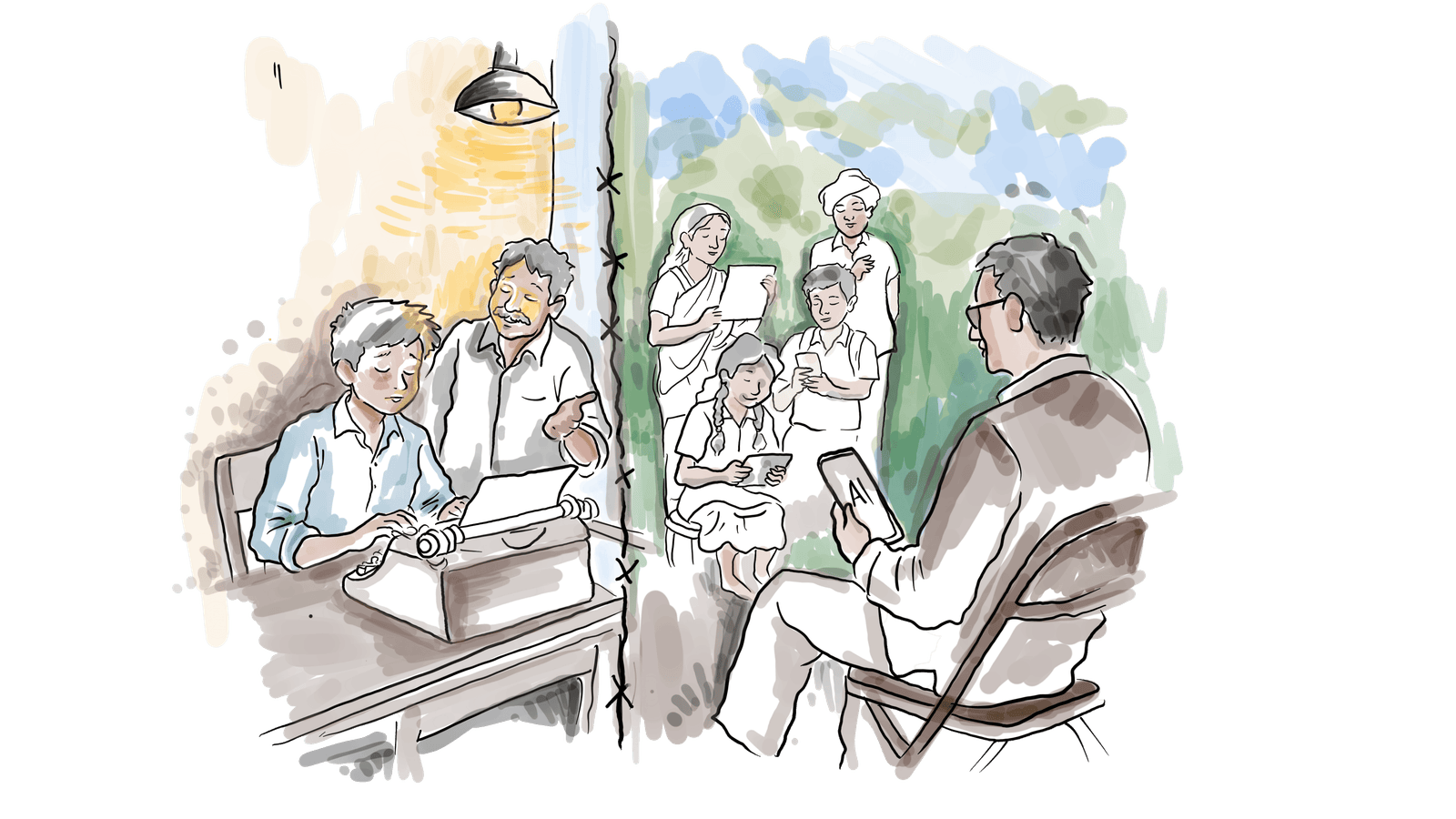
In response to systemic failure, civil society has quietly become the region's most important welfare infrastructure, not as service providers, but as translators between citizens and opaque digital systems. Non-Governmental Organisations (NGOs) like Seven Sisters Development Assistance (SeSTA), Professional Assistance for Development Action (PRADAN), and Digital Green document that approximately 12% of rural households require manual intervention to remain visible in government databases at all. Without this work, they simply disappear from the digital roster.
The North Eastern Region (NER) District Sustainable Development Goals (SDG) Index 2023-24, developed by the National Institution for Transforming India (NITI Aayog) alongside the Ministry of Development of North Eastern Region (MDoNER) and the United Nations Development Programme (UNDP), records a notable rise in Front Runner districts across the region, from 62% in 2021 to 85%, with gains in gender equality, clean water, and clean energy access. Yet in blocks where human intermediaries such as Digital Sakhis and Adhikar Sakhis are active, grievance resolution rates for digital welfare complaints are 40% higher than in technology-only blocks. That gap is not a metric to celebrate. The Reserve Bank of India's (RBI) Financial Inclusion Index rose from 53.9 in 2021 to 64.2 in 2024, reflecting broader financial access nationally, but this progress must be stress-tested against the lived reality of a woman in rural Nagaland whose wage has been suspended because her photograph was cloudy.
Verdict: Sustainability Cannot Be An Afterthought
The NER SDG Index assessment of 121 districts across the eight northeastern states shows that while Mizoram, Sikkim, and Tripura have all districts ranked as Front Runners, states like Arunachal Pradesh continue to show challenges in Climate Action (SDG 13) and Industry, Innovation and Infrastructure (SDG 9). These are precisely the two goals that AI-driven development is supposed to advance. The irony is sharp: the tools deployed to close these gaps are themselves generating new forms of exclusion.
Sustainability, in the context of AI for the last mile, must mean more than ecological sustainability. It means building welfare systems that do not collapse under cloud cover, poor bandwidth, or a miss-seeded Aadhaar number. It means designing for the specific geography, climate, and linguistic reality of the Northeast rather than applying a national template and hoping it fits. The Economic Survey acknowledges that taking digitisation and technology to the rural economy is a key aspect of the rural development agenda. That agenda will remain incomplete as long as the technology defaults to rejection when it encounters the very conditions that define rural Northeast India: rain, hills, dialects, and intermittent signal.
Three shifts are essential. Automated denial must be replaced with automated flagging, so that when a biometric fails or an image is unclear, the system escalates to a human officer rather than issuing a final rejection. Edge AI infrastructure must be embedded at the village level so that verification can work offline and sync only when a stable connection is found. And India needs a legislative guarantee of a Right to a Human in all welfare transactions, integrated with platforms like the Centralised Public Grievance Redress and Monitoring System (CPGRAMS), providing every citizen a path to an officer empowered to override an algorithm when it produces injustice.
The Economic Survey envisions a Viksit Bharat 2047 built on Sabka Saath, Sabka Vikas (collective effort, inclusive growth). That vision is tested not in parliament or in data centres but in the moment a woman in the hills of Nagaland submits a photograph of a dam she built, waits for wages she is owed, and receives nothing. AI is the only instrument capable of reaching the last mile at this scale. The question is whether it will open that mile or become yet another wall the last mile cannot climb.
Sources:
-
Economic Survey 2024-25, Ministry of Finance (indiabudget.gov.in)
-
Telecom Regulatory Authority of India (TRAI) Subscription Data, Oct 2025 (trai.gov.in)
-
NER District SDG Index 2023-24, NITI Aayog and UNDP (niti.gov.in)
-
National Family Health Survey (NFHS-5), Ministry of Health and Family Welfare (mohfw.gov.in)
-
Indian Journal of Labour Economics, Vol. 68(2), 2025 (springer.com)
-
Periodic Labour Force Survey, MoSPI (mospi.gov.in)
-
Ministry of Electronics and Information Technology / Mission BHASHINI PIB Release 2026 (bhashini.gov.in)
-
Seven Sisters Development Assistance (SeSTA) Annual Impact Report 2025 (sesta.org.in)
-
CRISIL Foundation Moi Pragati Assessment 2025 (crisil.com)
-
Professional Assistance for Development Action (PRADAN) Institutional Reports 2025 (pradan.net)